Roaming.Camp
Washington field guide hero

FIELD GUIDE · CHAPTER 47 · REGION IEST. 2026

Washington

The Evergreen State

WA · 47°23′ N · 120°27′ W · 570 SITES SURVEYED

HOH RAIN FOREST CAMPGROUND · PLATE A-471

§ 01 — Opening Plate

A letter from the field

Washington runs from the Pacific Ocean to the 14,411-foot summit of Mount Rainier in under 90 miles, packing a vertical range almost nowhere else in the Lower 48 can match. Olympic National Park alone holds three distinct ecosystems within a single boundary — temperate rainforest, glaciated alpine, and wild Pacific coast — connected by a single park road. The North Cascades carry more than 300 glaciers, the largest concentration of active ice anywhere in the contiguous United States. Mount St. Helens still bears the raw scar of its 1980 eruption, with pyroclastic flow zones recovering in slow motion. The San Juan Islands, reachable only by ferry, hold orca pods and 19th-century farmsteads. Across the Cascade crest, the Channeled Scablands of eastern Washington record the catastrophic Missoula Floods of the last ice age in basalt coulees and dry waterfalls. No state outside Alaska holds this much living glacier or this many ecosystems in one drive.

§ 02 — The Plates

Top 10 sites, filed

No. 01PLATE A-471 · LEAD

Hoh Rain Forest Campground

Hoh Rain Forest Campground
PLATE A-471 · NPS UNIT · WA

Olympic National Park's signature rainforest campground sits at 578 feet along the Hoh River, deep in one of the wettest places in the contiguous United States — over 140 inches of rain a year drape the bigleaf maples and Sitka spruce in curtains of club moss. Eighty-eight sites spread under the canopy; the Hall of Mosses Trail (0.8 mi) leaves from the campground entrance, and the Hoh River Trail runs 17.3 miles to Glacier Meadows on Mount Olympus. Reserve on Recreation.gov for peak summer; first-come, first-served in the shoulder seasons.
NPSRead the plate →
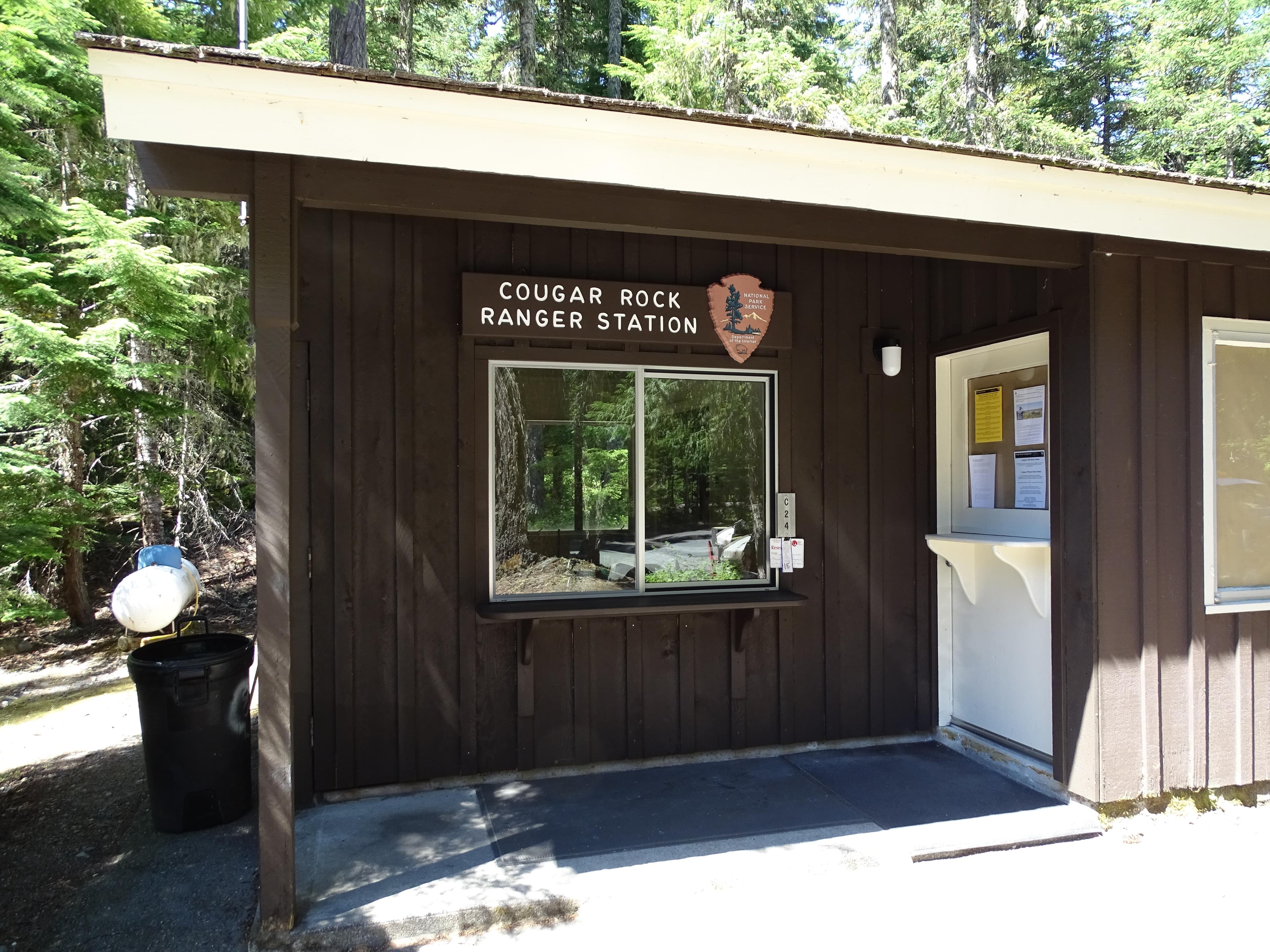
Cougar Rock Campground
No. 02PLATE A-472

Cougar Rock Campground

Mount Rainier's south-side workhorse — 173 sites at 3,180 feet along the Nisqually River, six miles below Paradise, one of the snowiest spots in the Lower 48 (averaging 53 feet annually). Paved loops accommodate tents and medium RVs, no hookups, with a dump station and walking distance to historic Longmire. The drive up to Paradise meadows opens into a postcard of glaciers and wildflowers by late July. Reservations open six months ahead on Recreation.gov and summer weekends sell out within minutes.

Kalaloch Campground
No. 03PLATE A-473

Kalaloch Campground

Perched on a 50-foot bluff between Ruby Beach and the mouth of the Hoh River, Kalaloch is Olympic's coastal classic — 168 sites with the Pacific roaring just beyond the salal hedges. The Tree of Life root cave, where a Sitka spruce somehow clings to nothing, is a quarter mile south. Driftwood, sea stacks, and tide pools are the daily routine. Reservable mid-June through Labor Day; first-come the rest of the year. Storm-watching season from November through February brings 20-foot Pacific swells.

Colonial Creek South Campground
No. 04PLATE A-474

Colonial Creek South Campground

North Cascades National Park's headline campground sits on the south shore of Diablo Lake at 1,200 feet, where glacial silt turns the reservoir an electric turquoise visible from space. 96 sites line the lakeshore along the North Cascades Highway (SR-20). The Thunder Knob Trail (3.6 mi RT, 600 ft of gain) and Pyramid Lake Trail (4.4 mi RT) both leave from camp. Reservable mid-May through late September on Recreation.gov; SR-20 closes seasonally over Washington Pass.

§ 03 — Field Data

The working page

§ 03A

Best Time

WindowJun–Aug
Peak — SummerJun–Aug
SpringMar–May
SummerJun–Aug
FallSep–Nov
WinterDec–Feb

Cascade high country opens. Paradise at Mount Rainier is typically free of snow by late June; the North Cascades Highway opens late April through May depending on the year; Sunrise opens by early July. The San Juan Islands peak now. The Olympic coast stays in the 60s and never gets hot — Kalaloch and Mora are summer-perfect. East WA pushes into the 90s and beyond. Wildfire smoke is the seasonal risk from mid-July through early October, especially east of the crest and in the North Cascades. Rainier's Cougar Rock, White River, and Ohanapecosh reservation pressure binds tightly — six-month windows fill within minutes for summer weekends.

§ 03B

Reservations

BookingRecreation.gov
Window opens6 months out
First-come sitesMixed · arrive early
Cancellation48 hr · per facility
Peak weekendsBook on release
§ 03C

Permits & Signal

BackcountryPermit required
DispersedUSFS · BLM · 14 days
Fire restrictionsSeasonal · check ranger
Signal · VerizonGood
Signal · AT&TGood
Signal · T-MobileFair
§ 03D

Camping Etiquette

Quiet hours10 PM – 6 AM
PetsLeashed · 6 ft
Pack-outAll waste
Food storageBear box / hang
Stay limit14 days · 30 day window

USFS, state-park, and BLM campgrounds welcome leashed dogs throughout most loops and trails. National parks restrict pets to campgrounds, paved roads, and a small number of paved trails — never on dirt trails, never in the…

§ 04 — Almanac

Four seasons, four readings

Spring

Mar–May

Wet and gray west of the Cascades. The Hoh and Quinault rainforests are at full saturation — 140-plus inches a year drape the canopy in dripping moss — and the Olympic coast is shoulder-ready, cool but accessible. Cascade high country stays snowbound: Hurricane Ridge Road and Paradise Road stay snowbound into late May or June; the North Cascades Highway (SR-20) typically reopens late April through May. Olympic NP's Hoh Visitor Center and Kalaloch Campground stay open year-round. East of the crest, eastern Washington hits the 70s by April — Steamboat Rock, the Grand Coulee, and Lake Roosevelt are at their best while the west side is still draining out.

Summer

Jun–Aug

Cascade high country opens. Paradise at Mount Rainier is typically free of snow by late June; the North Cascades Highway opens late April through May depending on the year; Sunrise opens by early July. The San Juan Islands peak now. The Olympic coast stays in the 60s and never gets hot — Kalaloch and Mora are summer-perfect. East WA pushes into the 90s and beyond. Wildfire smoke is the seasonal risk from mid-July through early October, especially east of the crest and in the North Cascades. Rainier's Cougar Rock, White River, and Ohanapecosh reservation pressure binds tightly — six-month windows fill within minutes for summer weekends.

Fall

Sep–Nov

The highest wildfire window runs late September through October before the rains return. The North Cascades Highway (SR-20) gates by mid-October to mid-November depending on snow, with Chinook Pass (SR-410) and Cayuse Pass (SR-123) at Rainier closing in the same window. Larch needles turn gold in the eastern North Cascades — the third week of September through mid-October — and the Maple Pass Loop is the most-hiked larch trail in the state. The Olympic coast is at its clearest in September and early October before the storm season fires up. Cougar Rock and White River close by late September; the lower-elevation rainforest campgrounds (Hoh, Sol Duc, Kalaloch) run through October.

Winter

Dec–Feb

Wet on the west side, snow-locked above roughly 3,000 feet in the Olympics and 4,000 feet in the Cascades. Paradise stays open year-round for snowshoe and ski access — the road is plowed Monday through Sunday, weather permitting, with gate closures for active storms. Hurricane Ridge is open weekends only (Friday–Sunday, snow-dependent). The North Cascades Highway is gated, typically mid-November through April. The Olympic coast stays accessible: storm-watching season at Kalaloch brings 20-plus-foot Pacific swells from November through February, and the bluff campground stays open through it.

§ 05A — Activity File

Best for Hiking & Backpacking

Washington's hiking is built on the volcanic Cascade crest — Rainier at 14,411 feet, Baker, Adams, Glacier Peak — the Olympic Peninsula's Hoh and Quinault rainforest valleys, the North Cascades' alpine objectives in the so-called American Alps, and the Olympic Wilderness Coast for a multi-day shoreline traverse. These four campgrounds anchor the best of it.

§ 05B — Activity File

Best for RV Camping

Washington's RV camping is mostly federal — paved NPS loops at Rainier and Olympic, a year-round bluff campground on the Pacific coast, and east-WA hookup loops on the Columbia. None of these have full hookups inside Rainier or Olympic, but dump stations and well-graded sites accommodate rigs up to roughly 35 feet. The standouts:

§ 05C — Activity File

Best for Temperate Rainforest & Hot Springs

The Olympic Peninsula is the only place in the Lower 48 with temperate rainforest at scale — 140-plus inches of rain annually at the Hoh, a Sitka spruce / western hemlock / Douglas fir / bigleaf maple canopy hung with epiphytic mosses and licorice ferns. Sol Duc adds the rare rainforest-meets-thermal-pools pairing. Three campgrounds cover it.

§ 05D — Activity File

Best for Cascade Volcanoes & Glaciers

Washington holds five active volcanoes — Rainier, Baker, Adams, Glacier Peak, and St. Helens — and the North Cascades carry more than 300 glaciers, the most active glaciation of any state outside Alaska. These four campgrounds anchor Rainier's south and Sunrise sides, the North Cascades, and Mount St. Helens' east-side blast zone.

§ 07 — Q & A

Frequently asked

It depends on the region. Cascade high country (Paradise at Rainier, Sunrise, the North Cascades, Artist Point) is mid-June through September, with snow lingering on shoulder weeks. Olympic rainforest (Hoh, Sol Duc, Quinault) runs year-round, driest July through September. The Olympic coast is year-round, calmest July through October, with storm-watching season November through February. San Juan Islands peak July through August, with quieter shoulders in May–June and September. East Washington (Lake Roosevelt, the Channeled Scablands, Wenatchee NF) runs May through October with peak July through September and a mild winter window for the lowest-elevation parks.

§ 08 — Adjacent Sheets

Nearby chapters

END OF CHAPTER · WASHINGTON · § REGION I

CHAPTER 47 · FILED MAY 2026 · ROAMING.CAMP FIELD GUIDE · EDITION 2026