Roaming.Camp

Best Camping in

Montana

Big Sky Country

953 campgrounds10 parksAvg rating 4.5

Overview

Montana is the fourth-largest state in the country and contains some of the most consequential wilderness on the continent. Glacier National Park anchors the northwest, where the Going-to-the-Sun Road crests Logan Pass between glacier-carved cirques the size of small towns. The Bob Marshall Wilderness Complex south of Glacier is the largest roadless area in the Lower 48 outside Alaska — over 1.5 million acres of grizzly habitat and snowmelt rivers without a single developed campground in its interior. Yellowstone's north and west entrances both sit in Montana, and the Beartooth Highway out of Red Lodge climbs to 10,947 feet on its way to Cooke City. Add the Flathead Lake basin, the Absaroka peaks above Paradise Valley, and a state park system that runs from prairie badlands to alpine reservoirs, and Montana delivers a camping landscape that rewards ambitious itineraries and tolerates none of the shortcuts.

Last updated April 22, 2026

Top 10 Sites

Apgar Campground#1

Apgar Campground

RIDB

Glacier's largest campground sits at the foot of Lake McDonald with 194 sites spread across loops in a cedar-hemlock forest. Apgar is the west-side basecamp for Going-to-the-Sun Road, the Lake McDonald boat shuttle, and the Apgar Village amenities (general store, restaurant, ranger station). Most loops accept reservations through Recreation.gov six months out and book solid for July and August within minutes; a small first-come block fills by mid-morning in summer. Lake McDonald's polychromatic pebbles at the campground beach are one of the most photographed shorelines in the park.
Many Glacier Campground#2

Many Glacier Campground

RIDB

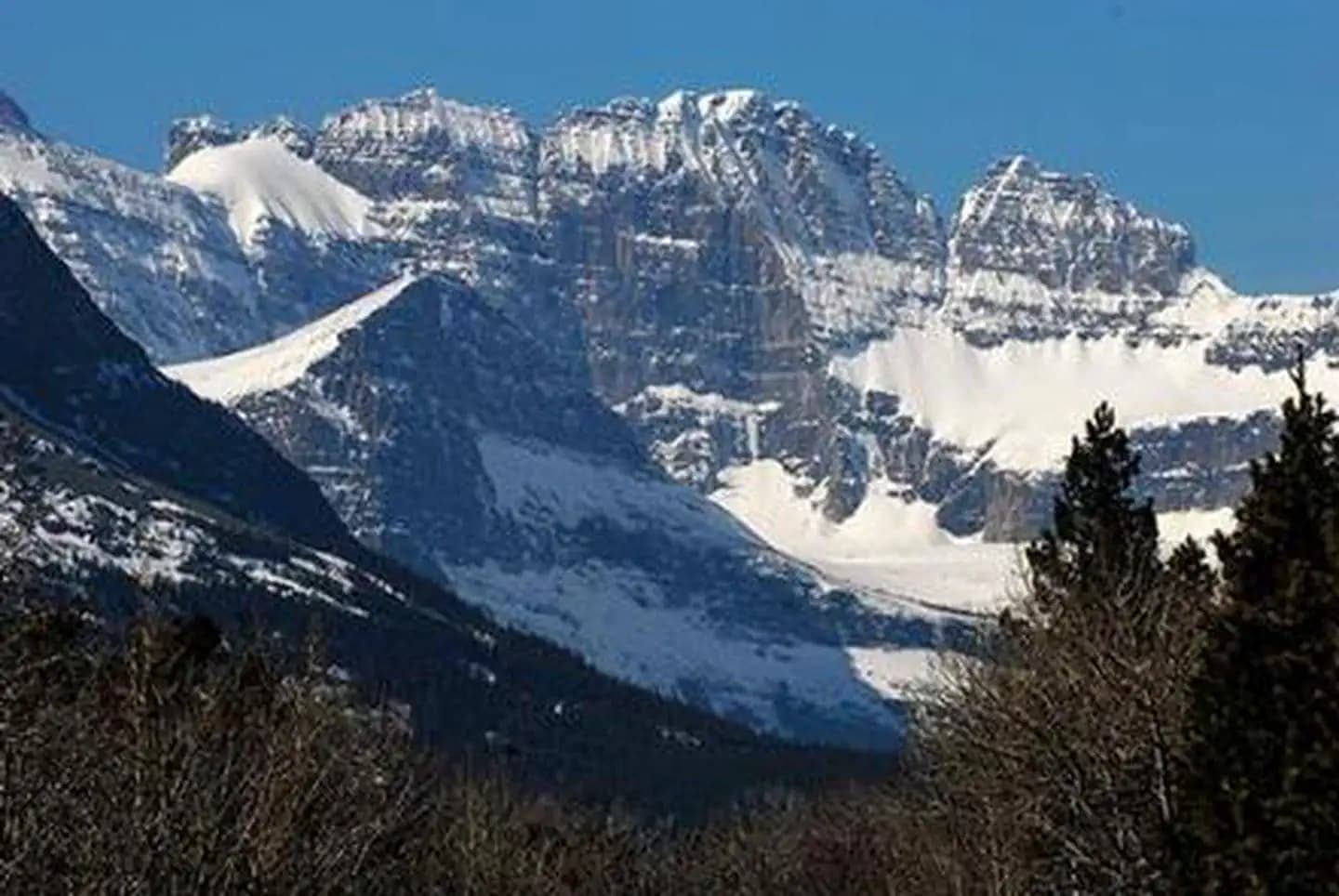
If Glacier has a single must-camp, it's Many Glacier. The 109-site campground sits beneath Mt. Grinnell in a glacier-carved valley most visitors only see from a tour bus, with the Grinnell Glacier, Iceberg Lake, and Cracker Lake trailheads all within walking distance. Grizzly activity is high — bear-resistant food storage is mandatory and routinely inspected. Reserve six months out the moment the booking window opens; the entire summer typically books within an hour. Loops B and C accommodate RVs up to 35 feet.

St. Mary Campground#3

St. Mary Campground

RIDB

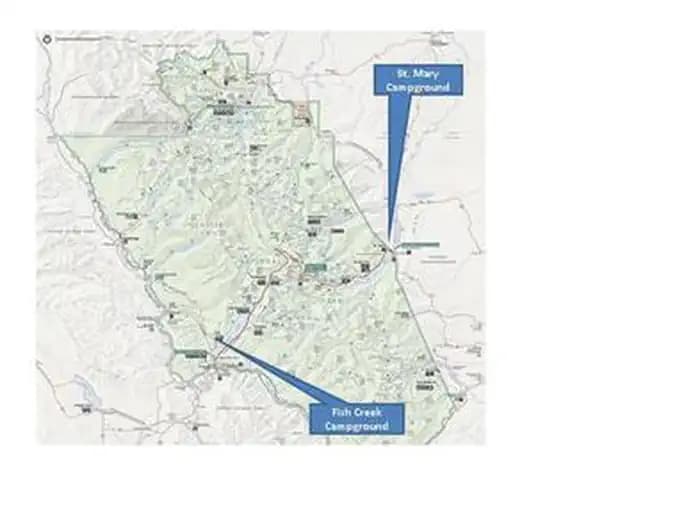
Glacier's east-entrance campground sits in cottonwoods along the St. Mary River with 148 sites, an amphitheater, and the most wide-open sky in the park. St. Mary catches morning light on the Lewis Range east face and is the closest campground to the eastern Going-to-the-Sun gateway and the Two Medicine and Many Glacier turnoffs. Wind off the plains can be ferocious — stake everything down. Reserve through Recreation.gov; loops open progressively from late May through mid-June depending on snowmelt.

Two Medicine Campground#4

Two Medicine Campground

RIDB

The most under-appreciated corner of Glacier. Two Medicine's 100 sites sit beside the lake of the same name in Glacier's southeast, where the Blackfeet Nation borders the park and crowds drop to a fraction of Many Glacier or Lake McDonald. The Dawson-Pitamakan loop, Sinopah, and the boat-assisted hike to Twin Falls all start from camp. The general store closes by Labor Day and reservations are required through Recreation.gov in summer. No RVs over 35 feet.

Avalanche Campground#5

Avalanche Campground

RIDB

The middle Glacier option — 87 sites in a deep cedar-hemlock grove at the head of Lake McDonald, with the Trail of the Cedars boardwalk and the Avalanche Lake trail starting steps from the campground entrance. Cell service is nonexistent, the canopy keeps things cool even in August, and the location splits the difference between Apgar and the high country at Logan Pass. Reservations through Recreation.gov; the campground typically opens in late June once snow clears the access road.

Mammoth Campground (Yellowstone)#6

Mammoth Campground (Yellowstone)

RIDB

Yellowstone's only year-round campground sits at 6,200 feet just inside the North Entrance from Gardiner, Montana. Mammoth's 85 sites are open to elk that wander through camp constantly — calving season in June can close loops on short notice. The Mammoth Hot Springs terraces are a 10-minute walk, and the Lamar Valley is a 45-minute drive east on a road that stays open in winter. Reservations are required May through October; sites are first-come, first-served the rest of the year. Bring a sleeping bag rated for 20°F any month.

Holland Lake Campground#7

Holland Lake Campground

RIDB

The classic gateway to the Bob Marshall Wilderness. Holland Lake's 39 sites sit on the north shore of a half-mile-long alpine lake at 4,000 feet in the Swan Range, with the Holland Falls trail (1.5 miles to the falls) and the Holland-Gordon Pass trail into the Bob both starting from the campground. The Holland Lake Lodge across the bay serves dinner and rents canoes. Reservations through Recreation.gov in summer; the campground stays open through September. No hookups.

Tally Lake Campground#8

Tally Lake Campground

RIDB

The deepest natural lake in Montana — 492 feet — sits in the Flathead National Forest northwest of Whitefish, and the campground's 39 sites hug the shore in a Douglas fir forest. Tally is a Forest Service classic: swim beach, canoe launch, no hookups, and no cell service. The drive in is 15 miles of well-maintained gravel from US-93. Reservable through Recreation.gov for summer dates; a small block stays first-come, first-served. The shoreline trail loop is one of the best easy hikes in the Whitefish range.

Greenough Lake Campground#9

Greenough Lake Campground

RIDB

Greenough Lake's 18 sites sit at 7,400 feet along Rock Creek in the Custer Gallatin National Forest, just below the Beartooth Highway switchbacks above Red Lodge. The campground is a launching point for the all-day climb to 12,799-foot Granite Peak — Montana's highest summit — and a quieter alternative to the busier Cooke City-side campgrounds for Beartooth travelers. Stocked trout in the lake, classic Forest Service ambiance, no hookups. Reservable through Recreation.gov from late June through September.

Pine Creek Campground#10

Pine Creek Campground

RIDB

Pine Creek sits in the Custer Gallatin National Forest above the Yellowstone River in Paradise Valley, the dramatic 50-mile corridor between Livingston and Yellowstone's north entrance. The 25 sites are nestled in a Douglas fir forest at 5,600 feet at the foot of the Absaroka Range, with the Pine Creek Falls and Pine Creek Lake trails climbing directly from camp. It's a strong Yellowstone overflow option when Mammoth and the in-park campgrounds are full, and the access to the Absaroka backcountry is the real draw. Reservable, no hookups.

Best for Hiking & Backpacking

Montana's hiking is defined by Glacier National Park's east-side trails and the Bob Marshall Wilderness Complex south of it — over 1.5 million acres of contiguous wilderness without a road. These campgrounds put you at trailheads for the state's most consequential routes.

Best for RV Camping

Montana's distances are long and the gas stations are sparse — RV travelers value campgrounds that combine highway access with room for a real rig. Glacier's east-side and Yellowstone's north entrance host the most RV-capable federal sites; private parks fill the gaps along I-90 and US-93.

Best for Fishing

Montana is the fly-fishing capital of the West. The Madison, Yellowstone, Big Hole, Bitterroot, and Blackfoot rivers all run through some of the country's most storied trout water, and the state's stocked alpine lakes deliver consistent action through summer. These campgrounds put you on the water.

Best for Wildlife Viewing

Montana hosts the largest grizzly bear population in the Lower 48, alongside wolves, moose, mountain goats, bighorn sheep, and the Yellowstone bison herd. The Northern Continental Divide Ecosystem (Glacier + Bob Marshall) and the Greater Yellowstone Ecosystem are two of the three intact grizzly populations in the country. Carry bear spray.

Seasonal Guide

Spring

Apr–May

Shoulder season with limited high-country access. Going-to-the-Sun Road typically opens between mid-June and the first week of July depending on snowpack — Glacier's interior is largely closed in April and May. Lower-elevation campgrounds at St. Mary, Apgar, and around Flathead Lake open through May. Wildlife is highly active — bears emerging from dens, calving elk in late May, migrating sandhill cranes in eastern Montana. Expect mud, snow squalls, and rivers running high with snowmelt.

Summer Peak

Jun–Aug

Peak season. All campgrounds open by late June; Going-to-the-Sun Road typically fully opens in early July. Reserve Glacier sites six months out — Many Glacier, St. Mary, and Two Medicine all book within hours of release. Daytime highs reach 75–85°F in the valleys but drop to 50s on the Continental Divide. Afternoon thunderstorms are common. Wildfire smoke from regional fires can degrade air quality from late July through August. Glacier requires vehicle reservations on Going-to-the-Sun Road in summer.

Fall

Sep–Oct

The most underrated camping season in Montana. September brings the larch turn — western larches in the Bob Marshall, Mission Range, and Glacier's west side glow gold the last two weeks of the month. The elk rut peaks in Yellowstone, crowds drop sharply after Labor Day, and the smoke season usually ends with the first big September rain. Most Glacier campgrounds close mid-September through early October as snow returns to the high country. Nights drop into the 20s. The first significant snow on Logan Pass typically arrives by October 15.

Winter

Nov–Mar

Most developed campgrounds are closed. Mammoth Campground in Yellowstone is the state's only year-round NPS campground. A few private RV parks around Bozeman, Missoula, Kalispell, and West Yellowstone stay open with electric hookups for snowbird and ski-town travelers. Going-to-the-Sun Road closes by mid-October and reopens in pieces through June. Backcountry winter camping is for the well-prepared only — temperatures regularly drop below zero in the valleys and well below in the mountains.

Weather & Coverage

Weather Overview

Montana's weather is dominated by the Continental Divide, which splits the state into a Pacific-influenced western half and a continental eastern half. Glacier and the Flathead Basin see more rain and milder temperatures; the eastern plains swing from 100°F summer afternoons to -30°F winter cold snaps. Afternoon thunderstorms build over the mountains from mid-June through August and can produce lightning, hail, and brief but intense downpours. Pack layers regardless of season — a 75°F valley afternoon can become a 35°F evening at a mountain campground. Wildfire smoke is increasingly a factor from late July through early September; check airnow.gov before backcountry trips.

Cell Coverage

Cell coverage outside Montana's handful of cities is sparse. Verizon has the widest backcountry reach and the best coverage along I-90, US-93, and the Yellowstone north corridor. Glacier's interior — Many Glacier, Two Medicine, the Going-to-the-Sun Road above Lake McDonald — is a dead zone for all carriers. The Bob Marshall Wilderness has no cell service. AT&T performs adequately along I-90 and I-15 but drops out quickly off the interstates; T-Mobile is consistently weakest in mountain country. Download offline maps and tell someone your itinerary before heading into the backcountry.

VerizonFair
AT&TPoor
T-MobilePoor

Community Trip Reports

No trip reports yet for Montana sites. Be the first to share your experience!

Frequently Asked Questions

Peak camping runs late June through August when Going-to-the-Sun Road is open and all Glacier and Yellowstone campgrounds are accessible. September is the connoisseur's pick — the western larches turn gold, elk are rutting in Yellowstone, summer crowds dissipate, and the wildfire smoke usually clears with the first autumn storm. Most Glacier campgrounds close by mid-September; Mammoth at Yellowstone is the only year-round option in the state.

Nearby State Guides

Explore more camping near Montana

Wyoming

452 campgrounds

Colorado

1,019 campgrounds