Overview
Colorado packs more variety per square mile than almost any state in the country — four national parks, 58 fourteeners, the highest paved road in North America, and a camping landscape that runs from red-rock canyons at 4,500 feet to alpine tundra above 12,000. Rocky Mountain National Park draws the headlines, but the Maroon Bells outside Aspen may be the most photographed mountains on the continent, and the Great Sand Dunes rise 750 feet out of a high desert valley in a way nothing else in the Lower 48 does. The San Juan Mountains in the southwest are the state's quietest, wildest range, with aspen groves that turn the hillsides gold for three weeks each September. Add state parks along every major reservoir, a dense network of USFS campgrounds along the I-70 corridor, and enough BLM land for a lifetime of dispersed camping, and Colorado delivers.
Last updated April 21, 2026
Top 10 Sites
Best for Hiking & Backpacking
Colorado's trail network is unmatched in the Lower 48 — 58 fourteeners, the Continental Divide Trail, the Colorado Trail, and thousands of miles of alpine routes through four national forests. These campgrounds put you within walking distance of the state's most iconic hikes.
1. Silver Bell Campground
Trailhead access to Crater Lake and the Four Pass Loop — arguably the best four-day backpacking trip in Colorado, circling the Maroon Bells through 26 miles of alpine passes.
2. Timber Creek Campground
The Kawuneeche Valley trails start within walking distance. The Colorado River Trail climbs gently through moose country to Little Yellowstone and Lulu City's ghost-town ruins.
3. Moraine Park Campground
Direct shuttle access to the Bear Lake corridor, the launch point for Emerald Lake, Sky Pond, and the state's most iconic day hikes. Longs Peak trailhead is a 15-minute drive.
4. Chambers Lake Campground
Gateway to the Rawah Wilderness — 76,000 acres of alpine lakes and peaks that see a fraction of RMNP's foot traffic. The Blue Lake trail starts two miles from camp.
Best for RV Camping
Colorado's reputation for rough mountain roads undersells its RV infrastructure. Full hookups exist at every major state park, and well-maintained USFS campgrounds along the I-70 corridor accommodate rigs up to 40 feet. These are the best bets for travelers pulling something big.
1. Cherry Creek State Park
Full hookups, 130+ sites, showers, laundry, and direct access to a 35-mile paved trail network — the easiest RV basing option on the Front Range. Ten minutes from DIA and 20 from downtown Denver.
2. Peak One Campground
The I-70 sweet spot for RVers — pull-through sites accommodate rigs up to 40 feet, with a dump station and Lake Dillon access. Five minutes off the highway.
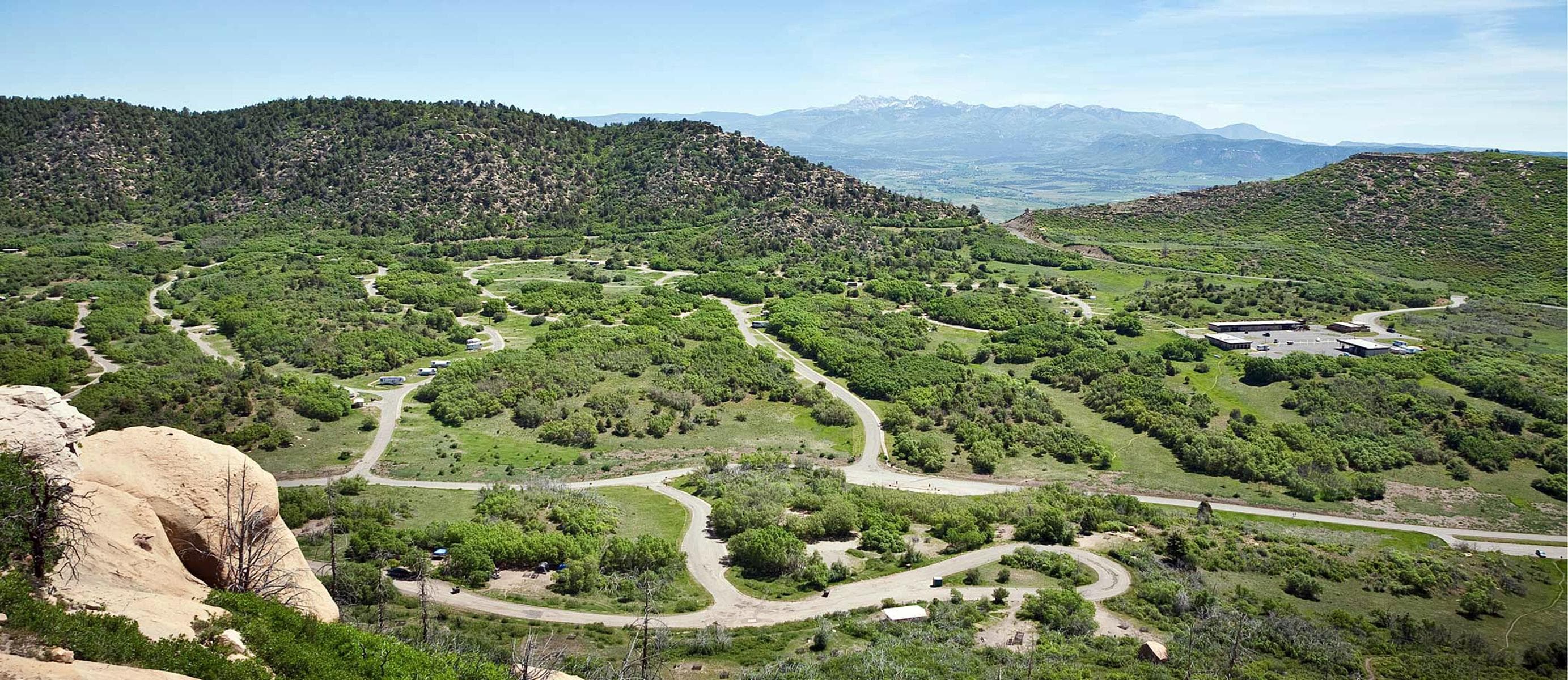
3. Morefield Campground
Mesa Verde's concession campground accommodates RVs up to 35 feet with electric hookups in a dedicated loop, plus a dump station, showers, and on-site store.
4. Moraine Park Campground
RMNP's largest RV-accessible campground — sites accommodate rigs up to 40 feet and a dump station is on-site, though no hookups. Reserve six months out.
Best for Fishing
Colorado Parks and Wildlife designates Gold Medal waters for rivers supporting trophy trout populations, and the state has more miles of Gold Medal fishery than anywhere else in the West. From alpine lake cutthroat to tailwater rainbows and Front Range warmwater bass, these campgrounds put you on the water.
1. Chambers Lake Campground
Stocked rainbow and brown trout in the reservoir, and the Laramie River headwaters within a short drive offer wild brookies in pristine alpine meadow water.
2. Peak One Campground
Lake Dillon holds rainbow, brown, and kokanee salmon, with shore access from camp and boat rental a short walk away at the Frisco marina.
3. Silver Jack Campground
Silver Jack Reservoir is quieter than the state-park options, with consistent trout fishing and scenic aspen-ringed shoreline.
4. Cherry Creek State Park
Cherry Creek Reservoir is stocked annually and produces rainbow trout, walleye, largemouth bass, and channel catfish — the Front Range's most accessible bank-fishing option.
Best for Fall Colors & Aspen Viewing
Colorado's aspen season peaks the last two weeks of September through the first week of October, when entire mountainsides turn gold and red. These campgrounds sit in the middle of the state's best aspen country — book early, because locals know.
1. Silver Jack Campground
Ringed by aspen groves that explode into gold the last week of September. Owl Creek Pass Road just above camp is one of Colorado's finest fall drives.
2. Silver Bell Campground
The Maroon Bells with the lake reflecting aspens at peak color is the archetypal Colorado fall photograph. Sunrise at Maroon Lake in late September is unforgettable.
3. Chambers Lake Campground
Cameron Pass and the Poudre Canyon light up with aspens and cottonwoods mid-September through early October. The drive up from Fort Collins is an autumn pilgrimage.
4. Moraine Park Campground
RMNP's aspen groves hit peak color the third week of September, just as the elk rut fills the meadow with bugling bulls at dawn and dusk.
Seasonal Guide
Spring
Apr–May
Mud season in the high country. Rocky Mountain National Park's Trail Ridge Road stays closed until late May. Campgrounds above 9,000 feet remain snowed in, so April and early May trips happen at lower-elevation state parks (Chatfield, Cherry Creek, Jackson Lake) or in the warmer southwest near Mesa Verde and the Black Canyon. Wildlife is active — bighorn sheep calving in late May, black bears emerging from dens. Expect afternoon snow squalls at elevation through Memorial Day.
Summer Peak
Jun–Aug
Peak season. All campgrounds open by mid-June. Afternoon monsoon thunderstorms are a daily event from mid-July through August — they build from 2 PM, peak 4–6 PM, and clear by dark. Plan 14er summits for sunrise starts and be below treeline by noon. RMNP requires timed-entry permits for daytime access May 24 through October. Nights drop into the 40s even in July at campground elevation. Book Maroon Bells, RMNP, and state park sites 6+ months out.
Fall
Sep–Oct
The sweet spot. Aspens peak the last week of September in the San Juans and Maroon Bells, stretching through the first week of October in the Front Range. Elk rut fills the Moraine Park meadow with bugling at dawn. Monsoon season ends, skies run deep blue, and temperatures are ideal — 60s–70s by day, 30s by night. Most campgrounds above 9,000 feet close by mid-October as the first real snow arrives. Lower-elevation state parks stay open through November.
Winter
Nov–Mar
Most campgrounds are closed. Chatfield and Cherry Creek state parks near Denver remain open year-round with electric hookups. Mesa Verde's Morefield closes for the season but the park stays open for cliff-dwelling tours and winter access to Far View. Ski-town private RV parks stay open with full hookups for snowbird travelers. Backcountry winter camping on USFS land is legal and popular for well-prepared parties, though daytime highs often stay in the teens at elevation.
Weather & Coverage
Weather Overview
Altitude is the defining factor. Many Colorado campgrounds sit between 8,000 and 10,000 feet, where afternoon temperatures can swing 40°F from a sunny midday to a stormy evening. Pack layers regardless of forecast. Monsoon thunderstorms are a near-daily event from mid-July through August and can produce lightning, hail, and flash-flood potential in canyons. UV intensity at altitude is roughly double sea-level — sunscreen and sunglasses matter even on cool days. If you're driving up from sea level, plan to arrive a day early and sleep below 8,000 feet the first night to acclimatize.
Cell Coverage
Cell coverage is strong along I-70, I-25, and the Front Range, and decent around the larger resort towns (Aspen, Vail, Telluride, Durango). It drops to nothing in the RMNP interior, the Flat Tops, most of the San Juans away from highways, and the Black Canyon. Verizon has the widest backcountry reach, with AT&T close behind along highways and T-Mobile noticeably weaker off the interstate. Always download offline maps before heading into canyon country or backcountry, and tell someone your itinerary — most CO wilderness trailheads have no signal.
Community Trip Reports
No trip reports yet for Colorado sites. Be the first to share your experience!
Frequently Asked Questions
Nearby State Guides
Explore more camping near Colorado