Roaming.Camp
New Mexico field guide hero

FIELD GUIDE · CHAPTER 31 · REGION IIEST. 2026

New Mexico

Land of Enchantment

NM · 34°24′ N · 106°07′ W · 437 SITES SURVEYED

GALLO CAMPGROUND — CHACO CULTURE NHP · PLATE A-311

§ 01 — Opening Plate

A letter from the field

New Mexico's camping identity is the densest concentration of ancestral Pueblo and rock-art sites in the United States, stacked across more than 9,000 feet of vertical relief between the White Sands gypsum dunes at 4,000 feet and Wheeler Peak at 13,167. Chaco Culture is both a UNESCO World Heritage Site and an International Dark Sky Park. Bandelier's Frijoles Canyon cavates sit ten miles from Los Alamos. The Gila Wilderness was the first designated wilderness on Earth in 1924. Carlsbad's caverns dissolved out of a 250-million-year-old fossil reef. The Sangre de Cristos form the southernmost Rockies, and the Sacramento Mountains rise as a forested sky island above the Tularosa Basin. The state holds the highest mean elevation outside the Mountain West core, sees the North American monsoon as its dominant summer hazard from early July through mid-September, and protects more dark-sky designated places per capita than nearly any other state.

§ 02 — The Plates

Top 10 sites, filed

No. 01PLATE A-311 · LEAD

Gallo Campground — Chaco Culture NHP

Gallo Campground — Chaco Culture NHP
PLATE A-311 · NPS UNIT · NM

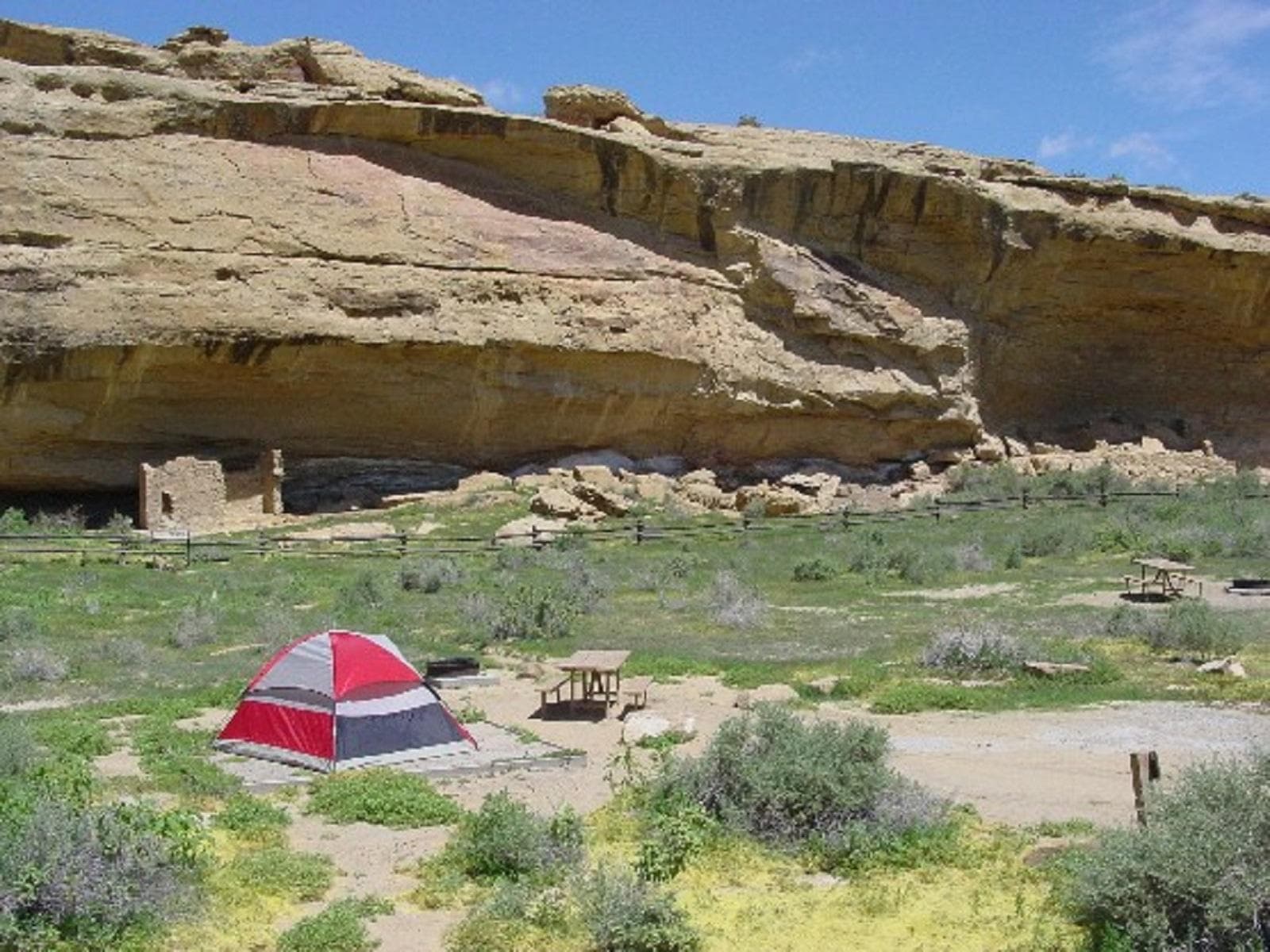
The flagship and the spine of any New Mexico trip. Forty-nine sites under cottonwoods at 6,200 feet, no hookups, potable water at the visitor center only. Reservations on Recreation.gov open six months ahead. Chaco is an International Dark Sky Park — Casa Rinconada and Pueblo Bonito sit within walking distance via the nine-mile loop drive, and the Milky Way is the show after dusk. Access is sixteen miles of washboard NM-7950 from US-550; the road turns impassable for RVs after rain.

NPSRead the plate →
Juniper Family Campground — Bandelier NM
No. 02PLATE A-312

Juniper Family Campground — Bandelier NM

On the Pajarito Plateau at 6,600 feet, open year-round with fifty-plus sites tucked under piñon and ponderosa. The trailhead into Frijoles Canyon is one mile away; the cliff-dwelling cavates, the Long House wall, and the Alcove House ladder route all fall within a three-mile round trip. Reservations on Recreation.gov. From Memorial Day through mid-October day visitors must ride the Bandelier shuttle from White Rock, but registered campers may drive directly to the canyon floor.

No. 03PLATE A-313

Aguirre Spring Recreation Area — Organ Mountains

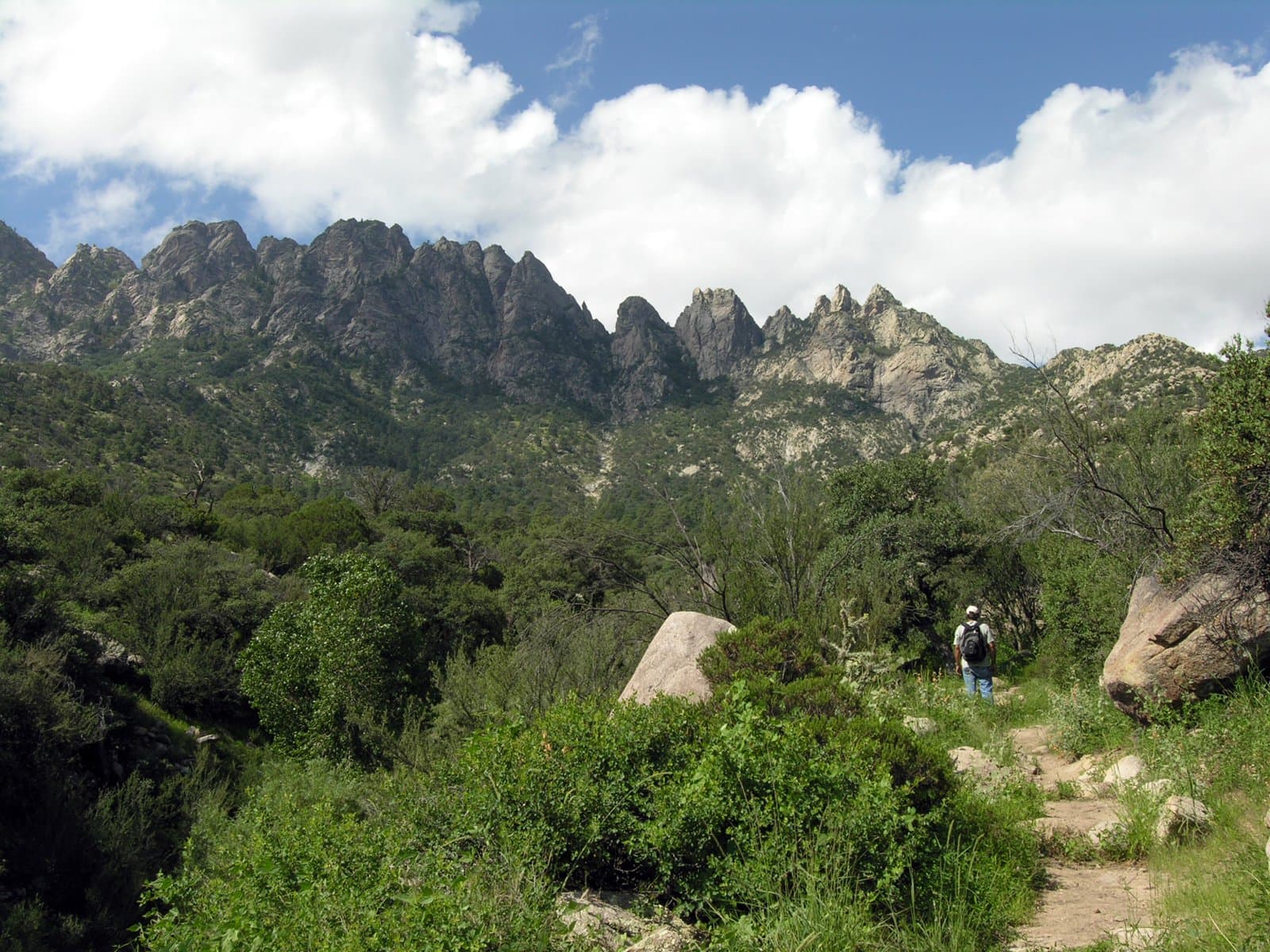
BLM Organ Mountains-Desert Peaks National Monument, 5,500 feet on the east face of the Organs, looking straight across the Tularosa Basin to White Sands NP. Fifty-five first-come, first-served sites — no reservations. Pine Tree National Recreation Trail (4.2-mile loop) and Baylor Pass (6.2-mile traverse) start at camp. The access road off US-70 is narrow and switch-backed with a strict 22-foot RV maximum. Alpenglow firing the Needles spires at sunset is the campground's signature.

No. 04PLATE A-314

Iron Creek Campground — Gila NF

Strung along NM-152, the Geronimo Trail Scenic Byway, above Silver City at about 7,000 feet. Fifteen small sites under spruce-fir on the edge of the Gila Wilderness and the Black Range. Reservable on Recreation.gov from mid-April through October; several sites stay walk-up. The Continental Divide Trail and a tangle of Black Range loops drop in from the campground itself. Vault toilets and no potable water — pack everything you'll drink in.

§ 03 — Field Data

The working page

§ 03A

Best Time

WindowJun–Aug
Peak — SummerJun–Aug
SpringMar–May
SummerJun–Aug
FallSep–Nov
WinterDec–Feb

High country opens — Wild Rivers' Cebolla Mesa sub-units, Black Canyon, Sleepy Grass, Iron Creek, and Cimarron in Valle Vidal become the relief valve. The North American monsoon arrives early-to-mid July and runs through mid-September: daily afternoon thunderstorms, flash floods in arroyos and the Río Grande gorge tributaries, lightning above 8,000 feet. White Sands and Carlsbad daytime highs routinely top 100°F — pre-dawn or post-sunset visits only. The Tularosa Basin around Valley of Fires tops 100°F most July afternoons and can push past 105°F. Gila Wilderness backpacking peaks despite the monsoon, but early starts and ridge avoidance are non-negotiable once cells start building by 1 PM.

§ 03B

Reservations

BookingRecreation.gov
Window opens6 months out
First-come sitesMixed · arrive early
Cancellation48 hr · per facility
Peak weekendsBook on release
§ 03C

Permits & Signal

BackcountryPermit required
DispersedUSFS · BLM · 14 days
Fire restrictionsSeasonal · check ranger
Signal · VerizonGood
Signal · AT&TGood
Signal · T-MobileFair
§ 03D

Camping Etiquette

Quiet hours10 PM – 6 AM
PetsLeashed · 6 ft
Pack-outAll waste
Food storageBear box / hang
Stay limit14 days · 30 day window

Yes on most USFS lands — Carson, Santa Fe, Cibola, Lincoln, and Gila national forests all allow dispersed camping for up to 14 days within any 30-day window, though specific rules vary by district. BLM lands…

§ 04 — Almanac

Four seasons, four readings

Spring

Mar–May

Desert south hits peak comfort — White Sands gypsum is most walkable now and Carlsbad daytime stays cooler than the brutal summer. North central thaws by April: Bandelier's Frijoles Canyon opens up and Santa Fe shoulders into shoulder season. The high country in the Sangre de Cristos, Wild Rivers, and Cimarron/Valle Vidal still carries snow at elevation through May. The defining hazard is wind — 40–60 mph gusts are normal across the eastern plains and Tularosa Basin in April, blowing tents flat and grounding small aircraft. Cottonwoods leaf along the Río Grande bosque mid-April. Chaco's washboard NM-7950 road is usually solid again by April after winter mud.

Summer

Jun–Aug

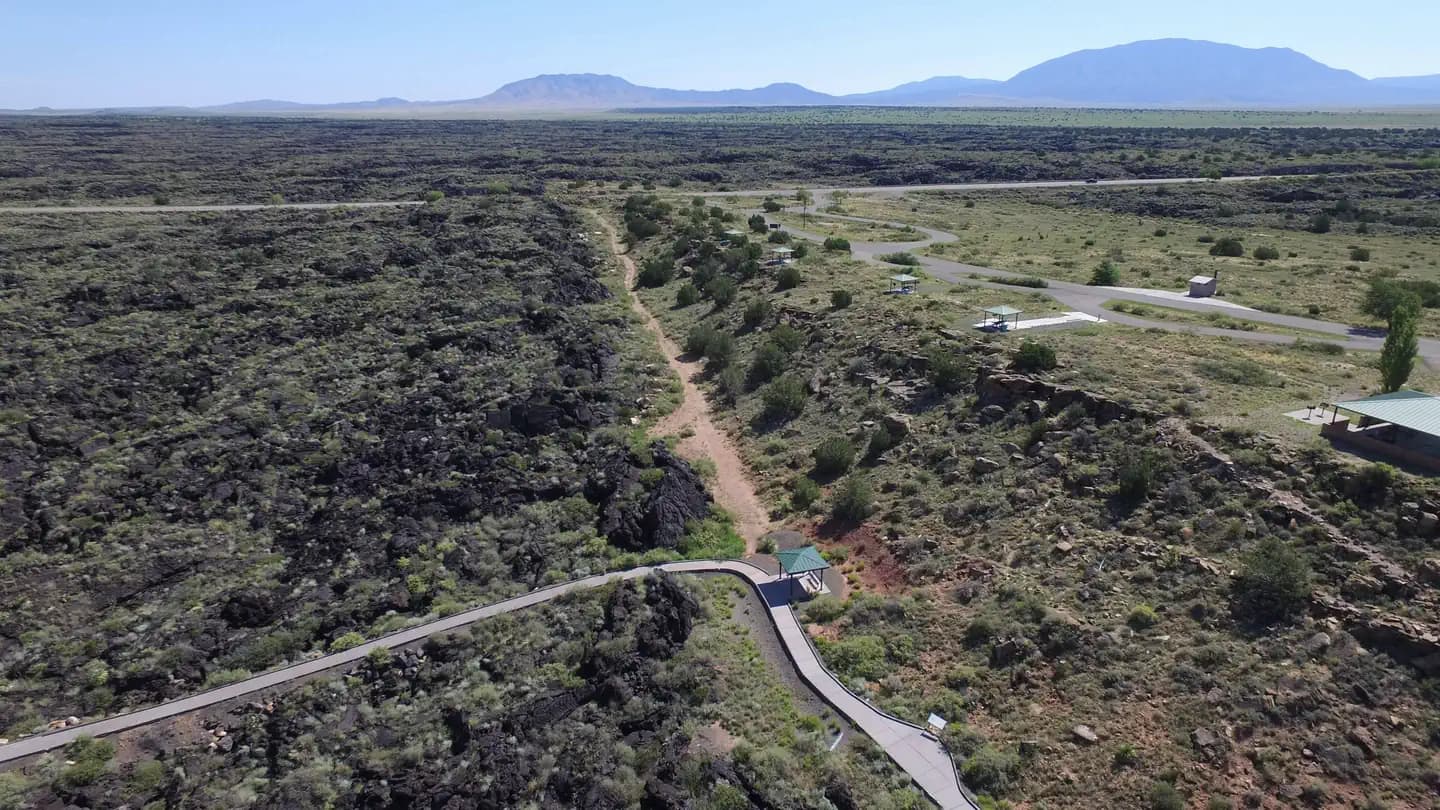
High country opens — Wild Rivers' Cebolla Mesa sub-units, Black Canyon, Sleepy Grass, Iron Creek, and Cimarron in Valle Vidal become the relief valve. The North American monsoon arrives early-to-mid July and runs through mid-September: daily afternoon thunderstorms, flash floods in arroyos and the Río Grande gorge tributaries, lightning above 8,000 feet. White Sands and Carlsbad daytime highs routinely top 100°F — pre-dawn or post-sunset visits only. The Tularosa Basin around Valley of Fires tops 100°F most July afternoons and can push past 105°F. Gila Wilderness backpacking peaks despite the monsoon, but early starts and ridge avoidance are non-negotiable once cells start building by 1 PM.

Fall

Sep–Nov

The broadest sweet spot. Aspens peak in the Sangre de Cristos the last week of September through mid-October — Wheeler Peak Wilderness, Hyde Park, and the Santa Fe Ski Basin road run gold against dark spruce. Cottonwoods turn along the Río Grande bosque mid-October. Monsoon humidity fades by mid-September and dark-sky viewing peaks because the air dries out — Chaco, Wild Rivers, and Valley of Fires hit their best clarity of the year. Chaco's optimum visit window lands here: daytime cool, washboard NM-7950 still drivable. Northern high country closes to first snow by early November and gates start shutting on the forest roads.

Winter

Dec–Feb

The desert flips to peak. Carlsbad, White Sands, Valley of Fires, and Aguirre Spring all run their calmest, coolest stretch — 60s by day, 30s overnight. Cloudcroft and the Sangre de Cristos pile cross-country skiing snow in the Sacramentos. Bandelier's Juniper Family Campground stays open year-round at 6,600 feet with occasional snow on the Pajarito Plateau. Chaco's NM-7950 access is generally passable but worse in winter mud — always call ahead before committing the drive. The southern BLM/RIDB sites stay mild: Aguirre Spring at 5,500 feet and Valley of Fires at 4,500 feet rarely see hard freezes.
§ 05A — Activity File

Best for Hiking & Backpacking

New Mexico stacks Pueblo-era cavate ladders against alpine wilderness loops in a way no other state does. Bandelier's Frijoles Canyon cliff dwellings, the Gila Wilderness (the first designated wilderness on Earth, 1924), the Río Grande gorge descent to a sandbar between black basalt walls, and the Organ Mountains' Pine Tree loop above the Tularosa Basin all land within a long weekend's drive.

§ 05B — Activity File

Best for RV Camping

New Mexico's top-tier campgrounds skew dry. Of the top ten, only Valley of Fires has electric hookups — the rest accommodate RVs but expect to dry-camp. The elevation range from 4,500 feet (Valley of Fires) to 8,800 feet (Sleepy Grass) gives natural temperature relief in summer, and several access roads narrow or wash out, so check rig length before committing.

§ 05C — Activity File

Best for Stargazing & Dark-Sky Sites

Three of New Mexico's federally designated dark-sky sites sit inside top-10 campgrounds in this guide. Chaco Culture NHP and Capulin Volcano are International Dark Sky Parks; Salinas Pueblo Missions and Clayton Lake SP are certified; and the Cosmic Campground in the Gila NF became the world's first International Dark Sky Sanctuary in 2016. The Milky Way reads as a structured arc, not a smudge.

§ 05D — Activity File

Best for Ancestral Sites & Rock Art

New Mexico holds a continuous human geography from Pueblo I through Pueblo IV (roughly AD 700–1600) — great-house masonry at Chaco, cavates at Bandelier, the Río Grande del Norte sacred corridor for Taos Pueblo, and the Tewa cultural geography around Abiquiu. These aren't isolated ruins; they're one connected story across a thousand vertical feet and seven hundred years.

§ 07 — Q & A

Frequently asked

It depends on elevation. Carlsbad Caverns and White Sands are October through April — summer in the Tularosa Basin clears 100°F by midday and the gypsum gets unwalkable. Chaco Culture is best April through June and again in October; the dirt access road and the dark-sky viewing both peak in those windows. Bandelier and Santa Fe (Black Canyon on Hyde Park Road) run comfortably April through November. The Gila Wilderness is April through November with monsoon caution from mid-July to mid-September. The Sangre de Cristos high country — Wild Rivers, Black Canyon, Cimarron in Valle Vidal — opens June through September after snow clears. The Sacramentos around Cloudcroft (Sleepy Grass, Apache) cover May through October for camping and December through March for cross-country skiing on the season's snowpack.

§ 08 — Adjacent Sheets

Nearby chapters

END OF CHAPTER · NEW MEXICO · § REGION II

CHAPTER 31 · FILED MAY 2026 · ROAMING.CAMP FIELD GUIDE · EDITION 2026