Roaming.Camp
Florida field guide hero

FIELD GUIDE · CHAPTER 09 · REGION IVEST. 2026

Florida

The Sunshine State

FL · 28°38′ N · 82°27′ W · 127 SITES SURVEYED

FLAMINGO CAMPGROUND — EVERGLADES NATIONAL PARK · PLATE A-091

§ 01 — Opening Plate

A letter from the field

Florida inverts the national camping calendar. The best season is winter — the November-through-April dry season brings mild 70s days while the rest of the country freezes, and premier parks book months ahead with snowbirds who know it. A 500-mile peninsula spans landscapes with almost nothing in common: the Everglades' river of grass draining toward Florida Bay; turquoise reefs off the Keys and Dry Tortugas' Civil War fort 70 miles offshore; the Panhandle's sugar-white Gulf barrier islands; the 72-degree crystal springs threading the Ocala National Forest. Campers work two strong systems: a deep federal bench — Everglades, Big Cypress, Gulf Islands National Seashore — and one of the country's best state-park networks, from Bahia Honda to St. George Island and Myakka. Paddle a spring run with manatees in January, beach-camp on an undeveloped Gulf island, or boat out to that offshore fort. Come in winter. Leave summer to the mosquitoes, lightning, and hurricanes.

§ 02 — The Plates

Top 10 sites, filed

No. 01PLATE A-091 · LEAD

Flamingo Campground — Everglades National Park

Flamingo Campground — Everglades National Park
PLATE A-091 · NPS UNIT · FL

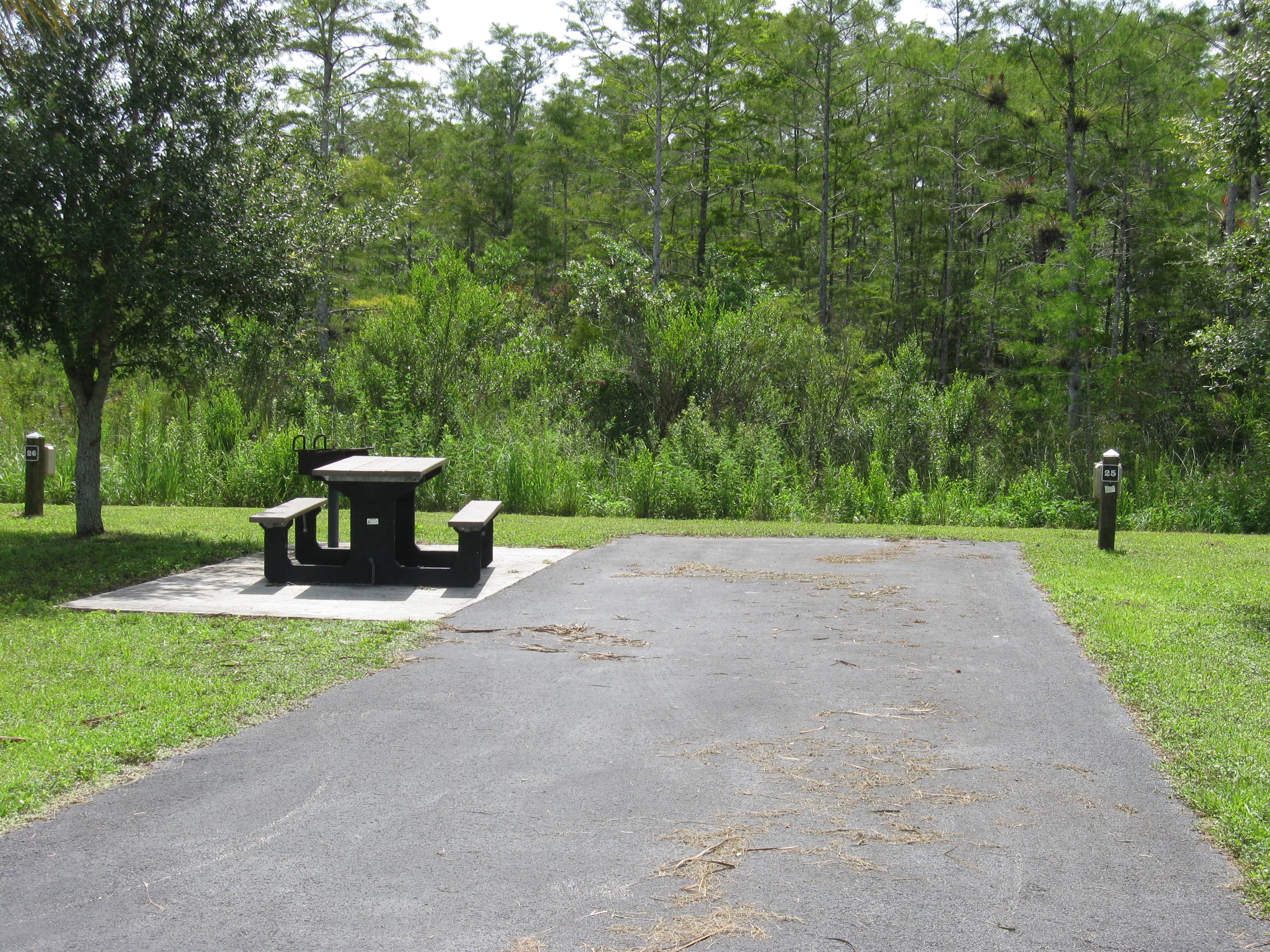
The southernmost mainland campground in the United States, at the end of the 38-mile main park road on Florida Bay in Everglades National Park. About 270 drive-up and walk-in sites, some with electric. American crocodiles bask at the Flamingo marina — one of the most reliable spots in the country — manatees cruise the basin, and roseate spoonbills stalk the shallows. Paddle Florida Bay or walk the Coastal Prairie Trail from the back of the loops. Book on Recreation.gov; come November through March and avoid summer.

NPSRead the plate →
No. 02PLATE A-092

Bahia Honda State Park — Florida Keys

On Bahia Honda Key at Mile Marker 37 in the Lower Keys, with Sandspur and Calusa beaches among the only natural sand beaches in the Keys — turquoise shallows, world-class snorkeling, and the rusting arches of the old Flagler railway bridge as a backdrop. About 80 sites across three campgrounds, some waterfront for tents and RVs. This park books up to 11 months ahead through Florida State Parks, and waterfront sites vanish within hours of opening. A concessionaire runs kayak and snorkel trips to Looe Key reef just offshore.

Garden Key Campground — Dry Tortugas National Park
No. 03PLATE A-093

Garden Key Campground — Dry Tortugas National Park

Primitive camping beside Fort Jefferson, a massive 19th-century brick fort 70 miles west of Key West, reachable only by the Yankee Freedom ferry or seaplane. About 10 first-come tent sites in a ring of coral and open water — no fresh water, no showers, no services; pack everything in including every drop you will drink. The moat wall and surrounding reef are some of the best snorkeling in Florida, the night sky is extraordinary, and spring migration funnels warblers and raptors through the island in waves.

Juniper Springs Recreation Area — Ocala National Forest
No. 04PLATE A-094

Juniper Springs Recreation Area — Ocala National Forest

A 1930s CCC-built spring in the heart of the Ocala National Forest, east of the city of Ocala. Swim in the historic stone-rimmed pool beside the old waterwheel mill house, then paddle the Juniper Run — a narrow seven-mile jungle creek of cabbage palms, ferns, and gators threading through dense scrub. About 60 shaded sites, reservable on Recreation.gov. The spring holds a constant 72 degrees year-round, making it a cool summer swim and a warm winter dip. Black bears move through the surrounding scrub and sand pine forest.

§ 03 — Field Data

The working page

§ 03A

Best Time

WindowDec–Feb
Peak — WinterDec–Feb
SpringMar–May
SummerJun–Aug
FallSep–Nov
WinterDec–Feb

The peak season — Florida's camping calendar runs opposite the rest of the country. The dry season delivers mild 70s days, cool nights, low humidity, and no bugs, while the rest of the nation freezes. Snowbirds pour south and the prime sites book months ahead — Bahia Honda, Dry Tortugas, Fort Pickens, and the Ocala springs go first. Manatees crowd the warm spring runs at Salt Springs and Blue Spring State Park, a signature winter wildlife show found nowhere else. Reserve as early as the window opens, eleven months out for state parks. This is Florida's prime camping window.
§ 03B

Reservations

BookingRecreation.gov
Window opens6 months out
First-come sitesMixed · arrive early
Cancellation48 hr · per facility
Peak weekendsBook on release

Florida camping runs on two separate systems, and keeping them straight saves frustration. Federal sites — Flamingo and Midway in the Everglades and Big Cypress, Dry Tortugas, Fort Pickens at Gulf Islands National Seashore, and the…

§ 03C

Permits & Signal

BackcountryPermit required
DispersedUSFS · BLM · 14 days
Fire restrictionsSeasonal · check ranger
Signal · VerizonExcellent
Signal · AT&TGood
Signal · T-MobileFair
§ 03D

Camping Etiquette

Quiet hours10 PM – 6 AM
PetsLeashed · 6 ft
Pack-outAll waste
Food storageBear box / hang
Stay limit14 days · 30 day window

§ 04 — Almanac

Four seasons, four readings

Spring

Mar–May

The tail of the dry season and a fine shoulder. March and April stay mild and pleasant before the heat builds, though spring-break crowds pack the beach parks and love bugs arrive by May. Sea-turtle nesting ramps up on the beaches by late spring — mind the lights-out rules — and manatees begin dispersing from the springs as the water warms. Reservations remain competitive at the marquee parks. Camp early in the season for the best balance of warm-but-not-brutal days, lower humidity, and far fewer mosquitoes than the summer to come.

Summer

Jun–Aug

The low season, and for good reason. Heat indices top 100°F with soaking humidity, near-daily afternoon thunderstorms roll through — Florida leads the nation in lightning strikes — and mosquitoes and no-see-ums are relentless, especially in the Everglades and Big Cypress where many sites sit nearly empty. Hurricane season opens June 1, and sea turtles nest under strict lights-out rules. The upside: deep discounts, open availability, warm Gulf water, and long days. If you camp now, favor the breezy coast over the buggy interior and watch the radar.

Fall

Sep–Nov

A season of two halves. September and October are the heart of hurricane season — storms close and evacuate parks on short notice — even as heat and humidity slowly ease. November flips the switch: the dry season returns, the air turns crisp and bug-free, the first snowbirds roll in, and camping becomes genuinely comfortable. Late fall is a quieter sweet spot just before the winter rush, with manatees starting to gather back in the warm spring runs. Reserve ahead; availability is still reasonable if you move before December.

Winter

Dec–Feb

The peak season — Florida's camping calendar runs opposite the rest of the country. The dry season delivers mild 70s days, cool nights, low humidity, and no bugs, while the rest of the nation freezes. Snowbirds pour south and the prime sites book months ahead — Bahia Honda, Dry Tortugas, Fort Pickens, and the Ocala springs go first. Manatees crowd the warm spring runs at Salt Springs and Blue Spring State Park, a signature winter wildlife show found nowhere else. Reserve as early as the window opens, eleven months out for state parks. This is Florida's prime camping window.

§ 05A — Activity File

Best for Beaches & Coastal Camping

Florida is a beach-camping state above all, and the camping spans both coasts and the Keys. Sugar-white quartz sand and emerald water line the Gulf Panhandle barrier islands, wild Atlantic dunes front the oldest city in the country, and the only natural sand beaches in the turquoise Keys are walkable from your tent — a range no other state can match.

§ 05B — Activity File

Best for Springs & Paddling

Florida's freshwater springs are a signature found nowhere else — gin-clear water at a constant 72 degrees year-round, feeding narrow jungle runs you can paddle for miles through palms and ferns. Add the wide Myakka River lakes and the coral-ringed shallows 70 miles offshore, and Florida's paddling and snorkeling lead the Southeast by a wide margin.

§ 05C — Activity File

Best for Wildlife & Birding

Nowhere in the Lower 48 packs in wildlife like South Florida — alligators and crocodiles share space here, manatees gather in warm spring runs, roseate spoonbills and wood storks stalk the shallows, and the elusive Florida panther still hunts the cypress. Much of it is visible right from camp, on a boardwalk or at a lakeshore in the early morning light.

§ 05D — Activity File

Best for Hiking & the Florida Trail

Florida hiking is flat but far from dull. The 1,500-mile Florida National Scenic Trail threads cypress strands and Gulf barrier-island dunes from the Everglades to the Panhandle, and boardwalks put you inches above gator-filled sloughs where no ordinary trail could go. The dry, cool winter months — November through March — are the season to walk it.

§ 07 — Q & A

Frequently asked

Winter is the prime camping window. November through April, the dry season takes hold: days sit in the mild 70s, nights turn cool, humidity drops, and bugs disappear — precisely when the rest of the country is buried in cold. Snowbird demand is the trade-off: Bahia Honda, Fort Pickens, the Ocala springs, and the Everglades fill months ahead, so set a reminder and book the moment your window opens. Spring is a pleasant shoulder — March and April stay warm without the brutal summer heat — before the crowds of spring break pass and the heat builds. Summer is the low season for a reason: heat indices top 100 degrees, near-daily thunderstorms roll through, and mosquitoes are relentless, especially in the interior. Hurricane season opens June 1 and runs through November 30. Fall splits in two: September and October carry the hurricane peak with storms capable of closing parks on short notice, but by November the dry season returns and camping becomes comfortable again.

§ 08 — Adjacent Sheets

Nearby chapters

END OF CHAPTER · FLORIDA · § REGION IV

CHAPTER 09 · FILED JUN 2026 · ROAMING.CAMP FIELD GUIDE · EDITION 2026