FIELD GUIDE · CHAPTER 33 · REGION IVEST. 2026
North Carolina
The Tar Heel State
NC · 35°33′ N · 79°23′ W · 233 SITES SURVEYED
SMOKEMONT CAMPGROUND — GREAT SMOKY MOUNTAINS NATIONAL PARK · PLATE A-331
§ 01 — Opening Plate
A letter from the field
North Carolina runs from mountains to sea in a single state, and its camping spans that whole sweep. It holds the highest peaks in the eastern United States — Mt. Mitchell at 6,684 feet leads a wall of six-thousand-footers — then falls away east to the longest stretch of wild Atlantic barrier-island beach left on the coast. The signature federal landscapes anchor each region: Great Smoky Mountains National Park, the most-visited national park in the country, on the Tennessee line; the Blue Ridge Parkway threading the spine; the Pisgah and Nantahala national forests filling the western mountains; and Cape Hatteras National Seashore strung down the Outer Banks. What makes it singular is the range of what you can chase — fall foliage that pulls the whole country to the Parkway each October, the densest black-bear population in the East, the waterfalls and world-class mountain biking around Brevard, and a wild, drive-on barrier coast at the far other end of the same drive.
§ 02 — The Plates
Top 10 sites, filed
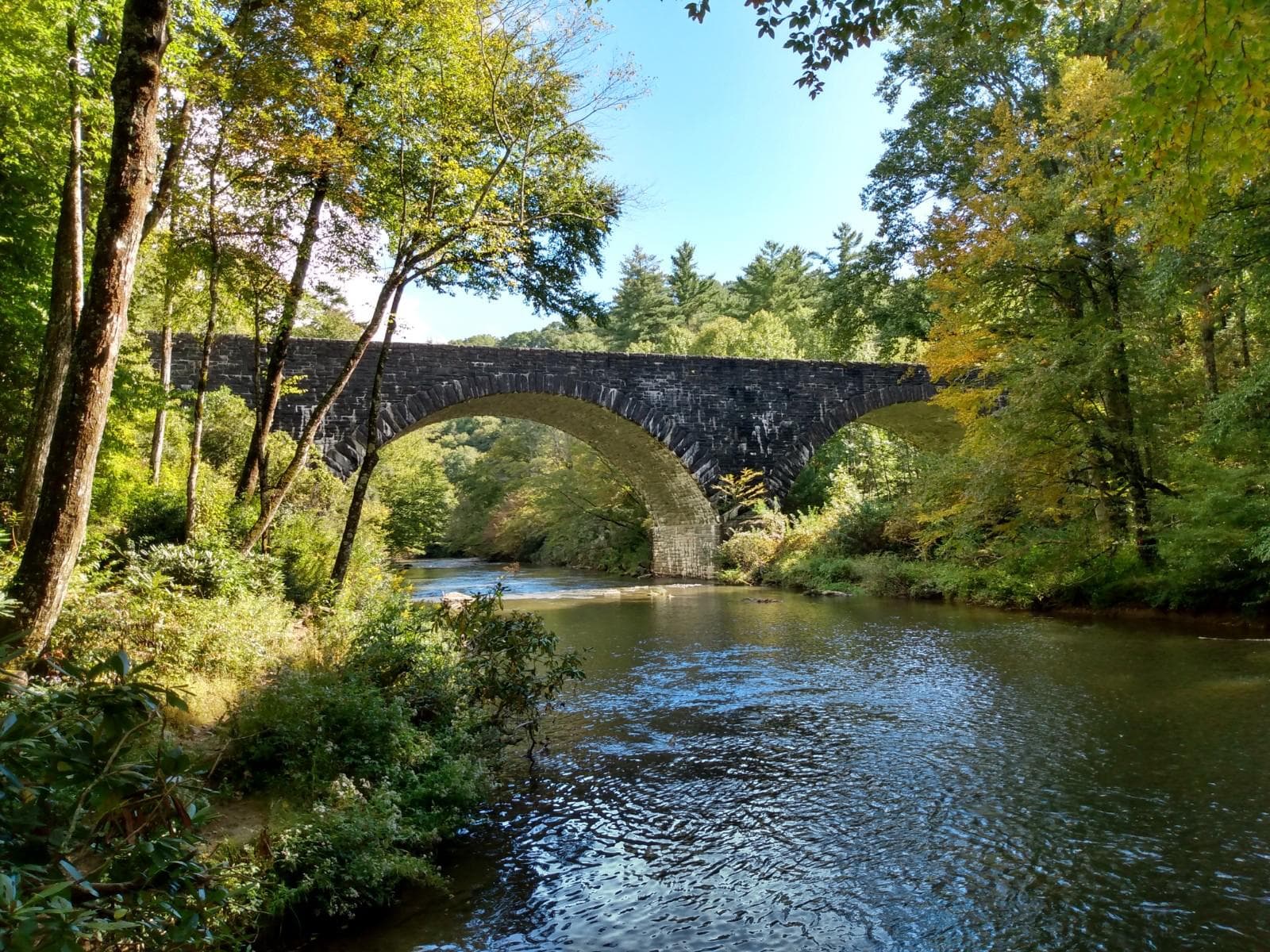
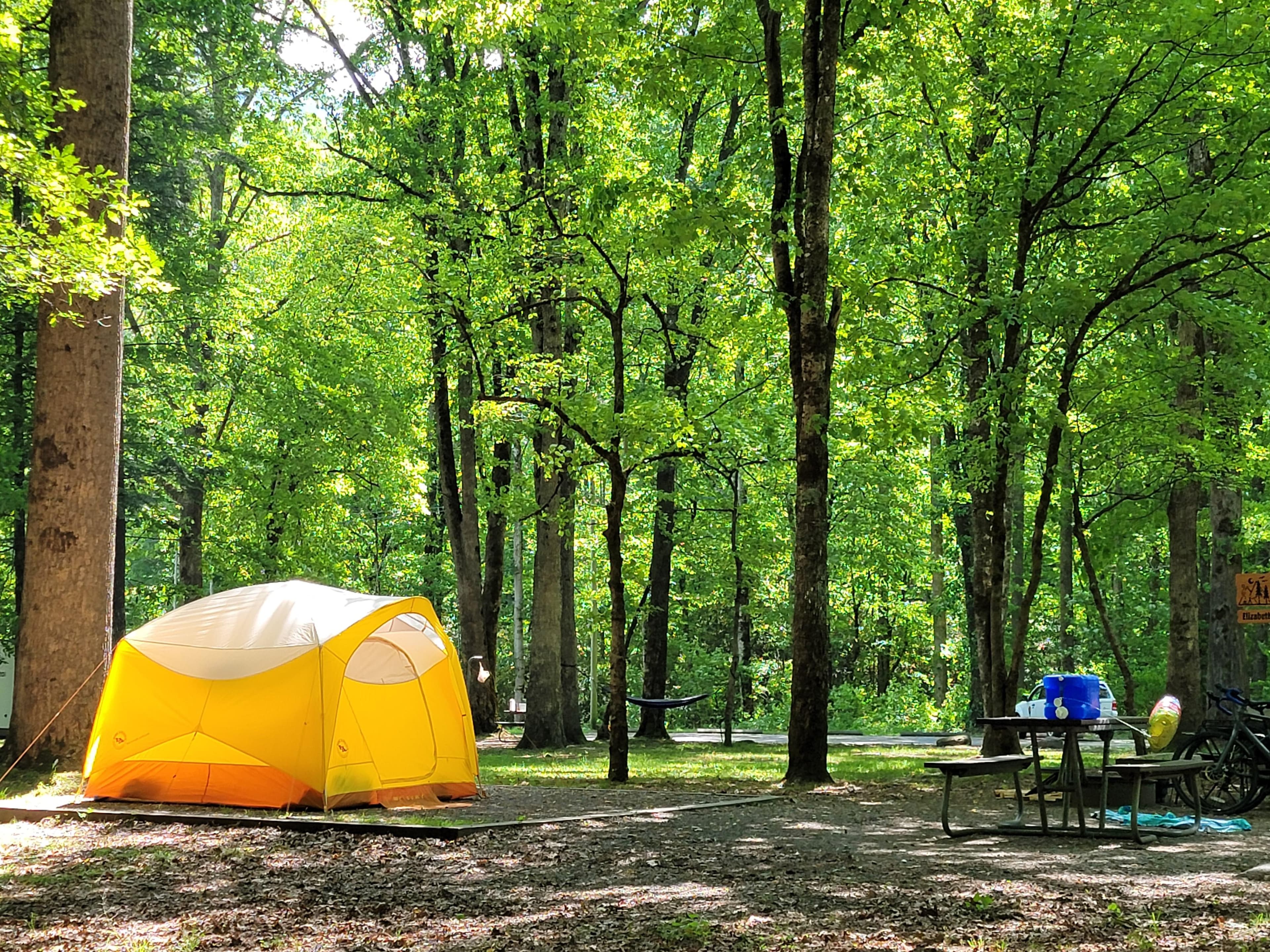
Smokemont Campground — Great Smoky Mountains National Park

On the North Carolina side of Great Smoky Mountains National Park along the Oconaluftee River near the Cherokee entrance, with roughly 140 sites at about 2,200 feet, reservation-only on Recreation.gov. The Bradley Fork and Smokemont Loop trails start right at camp, and elk graze the nearby Oconaluftee fields and Cataloochee Valley at dawn and dusk. This is the most-visited national park in the country, so book early. Black bears work the loops — use the food-storage lockers. Open most of the year, with the river running loud past the sites.
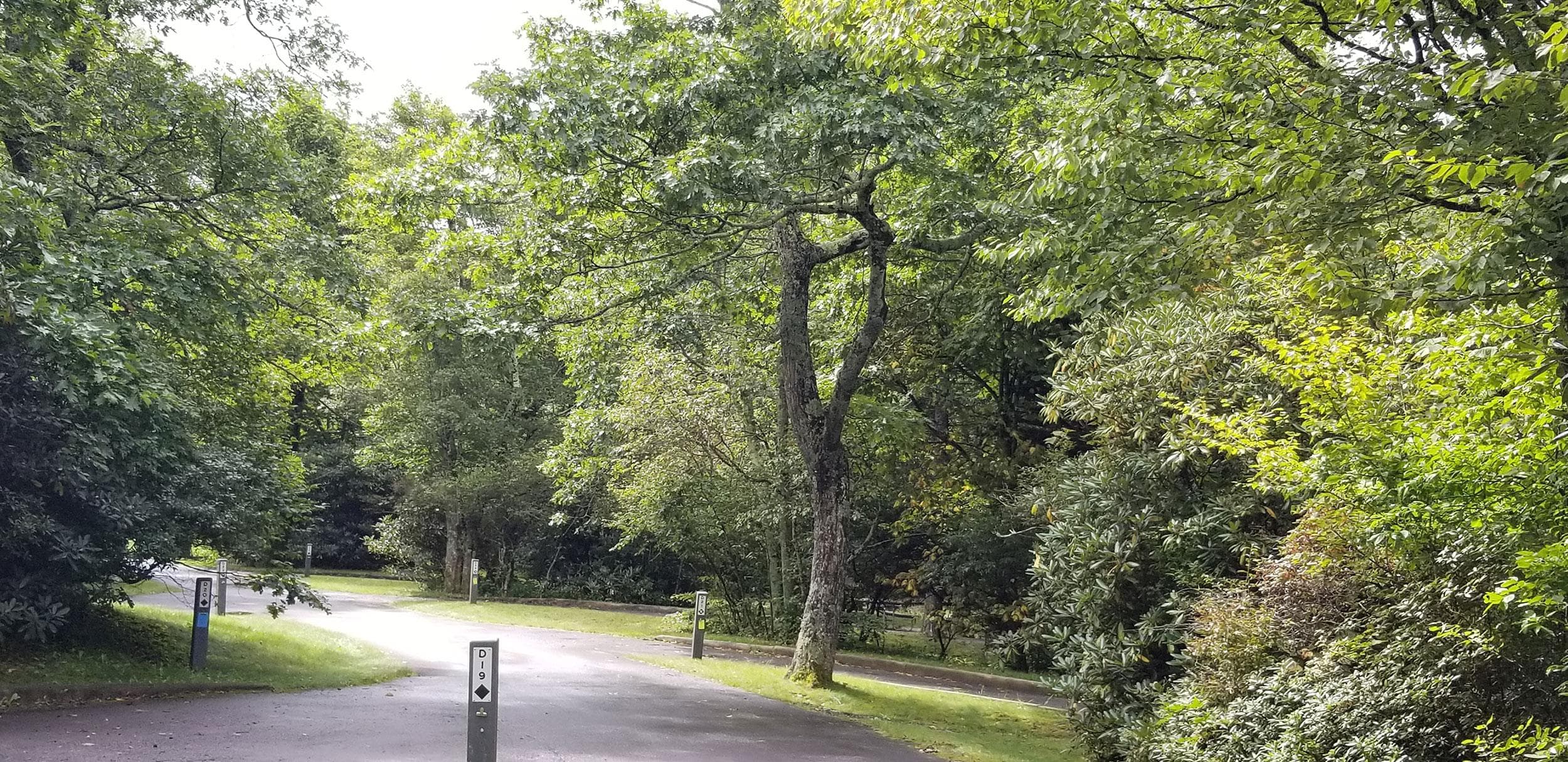
Mount Pisgah Campground — Blue Ridge Parkway
The highest campground on the Blue Ridge Parkway, at milepost 408 around 5,000 feet just southwest of Asheville beside the Pisgah Inn. Roughly 120 tent and RV sites, no hookups, reservable on Recreation.gov. The air runs cool and the camp is often wrapped in cloud, with the trail to Mount Pisgah's summit and the Mountains-to-Sea Trail passing through. Sunsets spread across ridge after blue ridge from the overlooks nearby. It gates shut for the winter when the Parkway closes, so check the season before you drive up.

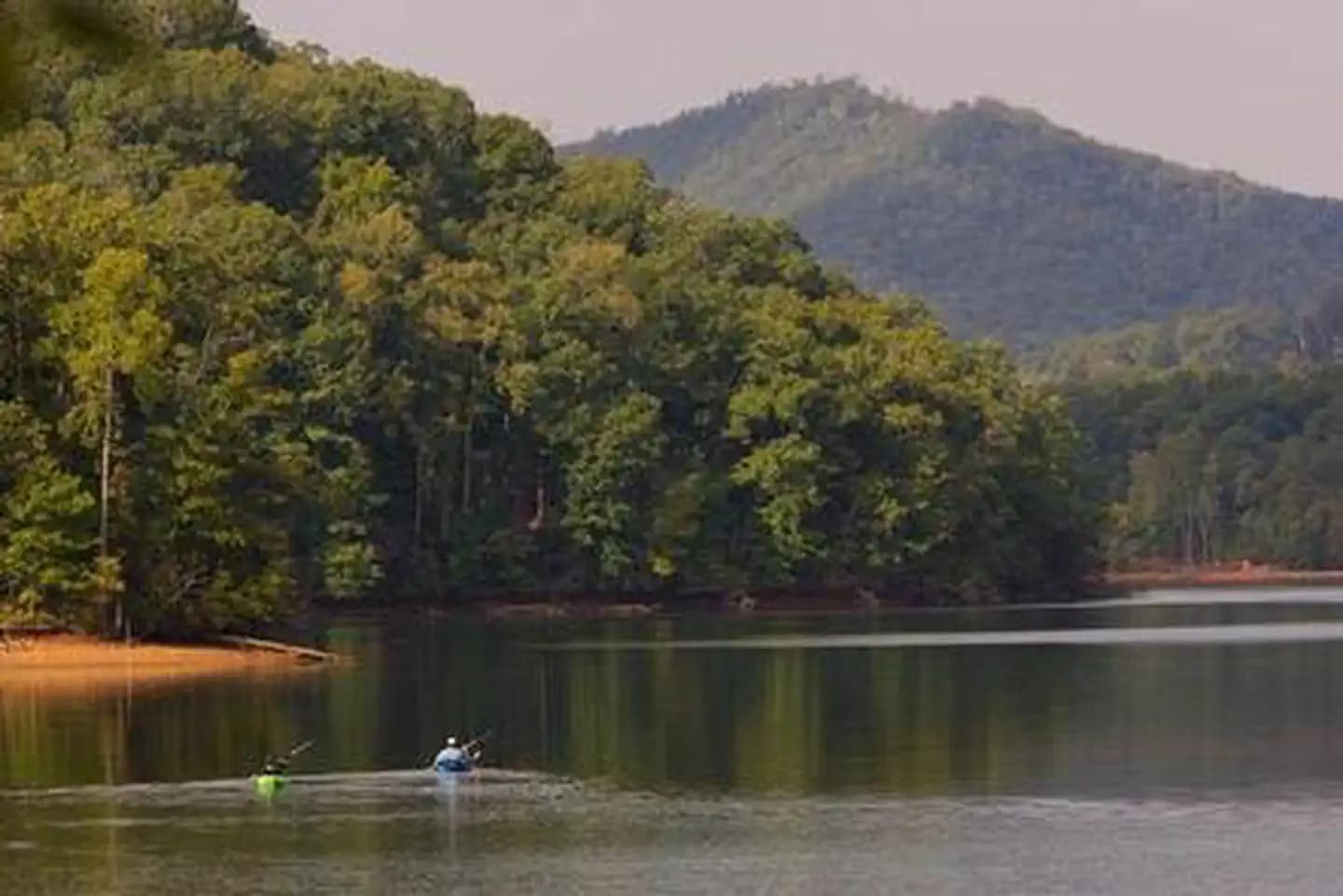
Julian Price — Blue Ridge Parkway
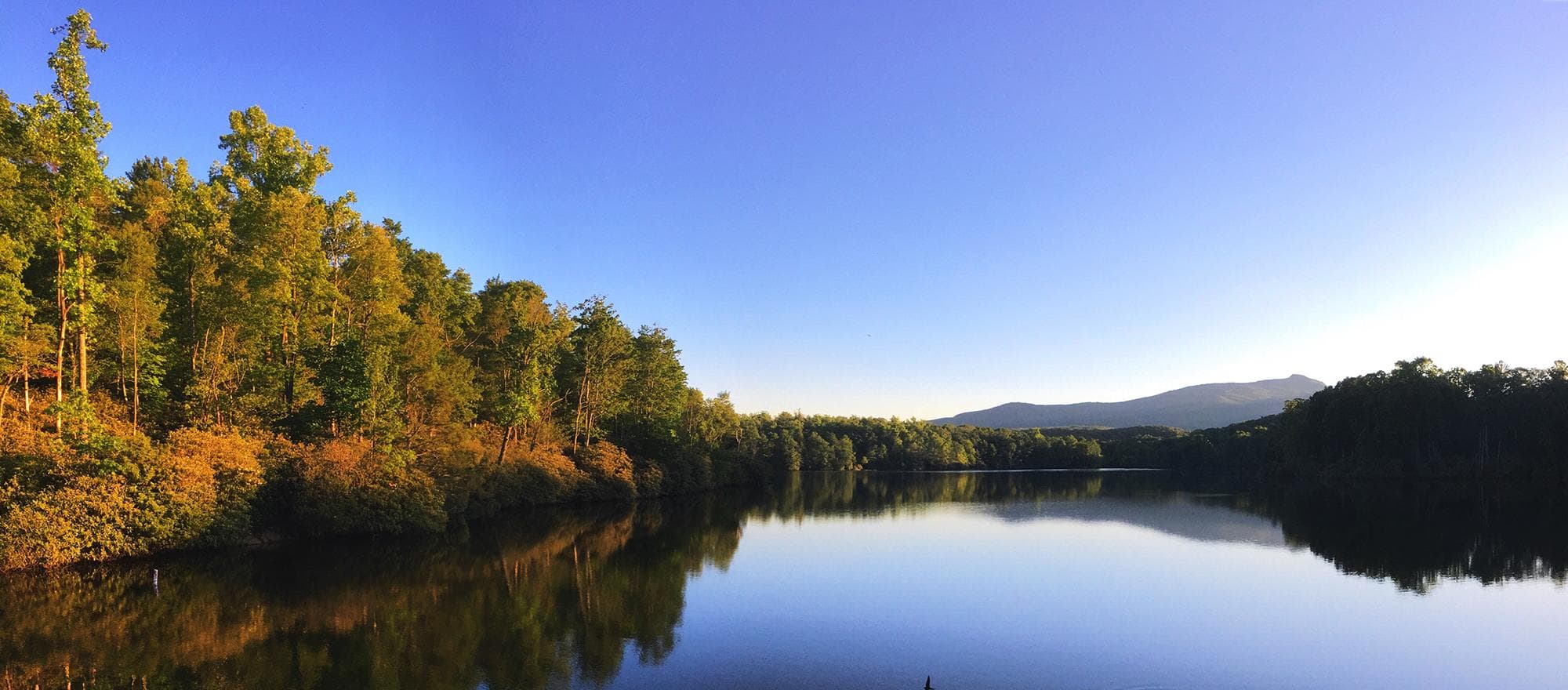
The largest campground on the Blue Ridge Parkway, roughly 190 sites at milepost 297 near Blowing Rock and Boone at about 3,400 feet, set on Price Lake beneath the rampart of Grandfather Mountain. Canoe and kayak rentals launch onto the no-motor lake, and the Boone Fork and Tanawha trails leave straight from camp. Reservable on Recreation.gov. The mountain nights turn genuinely cold even in summer, so pack a warm bag, and morning mist sits low on the glassy lake before the first paddlers push off into it.

Linville Falls — Blue Ridge Parkway
At Blue Ridge Parkway milepost 316 around 3,200 feet on the Linville River, minutes from Linville Falls and the rim of Linville Gorge, the so-called Grand Canyon of the East. Roughly 50 sites tucked under a dense canopy of hemlock and rhododendron, reservable on Recreation.gov. Short trails from the nearby visitor center reach a string of overlooks above the falls, and the rugged designated wilderness of the gorge drops away right next door. The river runs cold and clear past the sites, loud enough to carry through the rhododendron tunnels.
- 05Davidson River — Pisgah National ForestIn the Pisgah National Forest just outside Brevard, the self-styled Land of Waterfalls, off…→
- 06Jackrabbit Mountain — Nantahala National ForestA lakeside camp in the far southwest corner of the Nantahala National Forest near…→
- 07Standing Indian — Nantahala National ForestDeep in the southwest mountains of the Nantahala National Forest near Franklin, set around…→
- 08Oregon Inlet — Cape Hatteras National SeashoreOn the north Outer Banks at Cape Hatteras National Seashore, just south of Nags…→
- 09Cape Point — Cape Hatteras National SeashoreAt Buxton on Cape Hatteras National Seashore beside the Cape Hatteras Lighthouse, where the…→
- 10Badin Lake — Uwharrie National ForestCentral North Carolina's main forest campground, set on Badin Lake — a Yadkin River…→
§ 03 — Field Data
The working page
Best Time
THE peak season. Blue Ridge Parkway leaf color is a national draw, cresting from the high country in early October and dropping down to the foothills into early November. The air turns crisp, dry, and stable, the Cataloochee elk rut bugles near the Smokies, and mountain campgrounds book out for leaf weekends well ahead. The coast stays warm and swimmable into October with thinning crowds. Reserve early and aim for midweek to dodge the worst foliage traffic on the Parkway. This is the year's prime camping window across the whole state.
Reservations
No — they use a completely separate system. The campgrounds in this guide are federal sites in the national parks, seashores, and forests, and they book through Recreation.gov. North Carolina's state parks — Hanging Rock, Stone…
Permits & Signal
Dispersed, no-fee camping is allowed across much of the Pisgah and Nantahala national forests, outside developed campgrounds and posted day-use areas. The catch is that rules vary by ranger district. Some popular corridors — parts of…
Camping Etiquette
Dispersed, no-fee camping is allowed across much of the Pisgah and Nantahala national forests, outside developed campgrounds and posted day-use areas. The catch is that rules vary by ranger district. Some popular corridors — parts of…
§ 04 — Almanac
Four seasons, four readings
Spring
Mar–May
A superb shoulder season. Waterfalls run at full force from snowmelt and rain around Brevard and Linville, while wildflowers, then mountain laurel and rhododendron, bloom up the slopes from April into June. Lowland and coastal temperatures stay mild before summer humidity sets in, and coastal spring is excellent and uncrowded. But mountain nights stay cold and high-country campgrounds open gradually, so check Blue Ridge Parkway openings before driving up. Black bears emerge hungry in the mountains — store food in lockers from day one. Outstanding weather, but it yields the top spot to fall.
Summer
Jun–Aug
The mountains are the refuge. Mount Pisgah, the high Parkway, and the Nantahala forests stay genuinely cooler while the Piedmont and coast turn hot and humid. The Outer Banks hit beach high season — book far ahead — and Atlantic hurricane season opens, running June through November. Afternoon thunderstorms build over the mountains most days, and the Smokies and Parkway grow crowded. It is great for lake swimming and high-elevation hiking, but pack rain gear and start hikes early to beat the afternoon storms. Strong, but not the peak window — see fall.
Fall
Sep–Nov
THE peak season. Blue Ridge Parkway leaf color is a national draw, cresting from the high country in early October and dropping down to the foothills into early November. The air turns crisp, dry, and stable, the Cataloochee elk rut bugles near the Smokies, and mountain campgrounds book out for leaf weekends well ahead. The coast stays warm and swimmable into October with thinning crowds. Reserve early and aim for midweek to dodge the worst foliage traffic on the Parkway. This is the year's prime camping window across the whole state.
Winter
Dec–Feb
A tale of two states. The coast stays mild but windy with nor'easter risk, and Cape Hatteras camping turns quiet and stark. The mountains go cold and snowy, and sections of the Blue Ridge Parkway close to vehicles behind gates and ice, shutting Mount Pisgah, Julian Price, and Linville Falls for the season. Smokemont and the lower forests stay open but cold. Confirm what is actually open before driving up, carry traction for icy roads, and expect short days and hard overnight freezes at elevation. Plan around closures and you can have the high country to yourself.
§ 05A — Activity File
Best for Hiking & Backpacking
North Carolina hiking runs the spine of the Southern Appalachians. The Appalachian Trail loops the Standing Indian basin, the Mountains-to-Sea Trail crosses Mount Pisgah, the rim path circles Linville Gorge, and the deep, bear-roamed forests of the Smokies climb straight from camp. The terrain is cool, green, and steep, so carry rain gear.
Smokemont — Great Smoky Mountains National Park
Bradley Fork and the Smokemont Loop climb straight from the campsites into the most-visited national park's deep, bear-roamed forest, with elk in the Oconaluftee fields nearby.
Standing Indian — Nantahala National Forest
A base for the Appalachian Trail's classic Standing Indian basin loop and the high, open balds above, with the upper Nantahala running cold and trout-rich just nearby.
Linville Falls — Blue Ridge Parkway
Short walks reach the falls overlooks, and rugged routes drop into Linville Gorge, the 'Grand Canyon of the East,' beginning minutes from the hemlock-shaded loops.
Mount Pisgah — Blue Ridge Parkway
The Mountains-to-Sea Trail and the summit trail up Mount Pisgah leave from the Parkway's highest campground at about 5,000 feet, often wrapped in cool cloud.
§ 05B — Activity File
Best for Mountain Biking
North Carolina is one of the country's great mountain-bike states. Pisgah's rugged backcountry around Brevard, Jackrabbit's flowy lakeside singletrack, and the rooty Uwharrie trails near Charlotte span every level, while the high country around Boone adds gravel and carriage roads. Rentals and shuttles are easy to line up.
Jackrabbit Mountain — Nantahala National Forest
About 15 miles of well-built, flowy singletrack roll straight from the lakeside campground on Lake Chatuge — fast, fun, and friendly enough for beginners and families.
Davidson River — Pisgah National Forest
The gateway to Pisgah's legendary, rugged backcountry riding and nearby DuPont's flow trails — the beating heart of Brevard's renowned mountain-bike scene.
Badin Lake — Uwharrie National Forest
The Wood Run network laces shared mountain-bike and OHV singletrack through the rocky Uwharrie hills right beside camp — the Piedmont's best-known ride and a rare bit of flat-country backcountry.
Julian Price — Blue Ridge Parkway
A high-country base near Boone and Blowing Rock, with gravel, greenways, and the Rocky Knob trail system a short drive from the lakeside campground.
§ 05C — Activity File
Best for Beach Camping & Surf Fishing
The Outer Banks are North Carolina's camping coast — wild, dune-backed national-seashore sites where you sleep within earshot of the surf. Cape Hatteras is a surf-fishing legend, and Oregon Inlet launches one of the East Coast's premier offshore fleets. Bring shade, plenty of water, and long sand stakes.
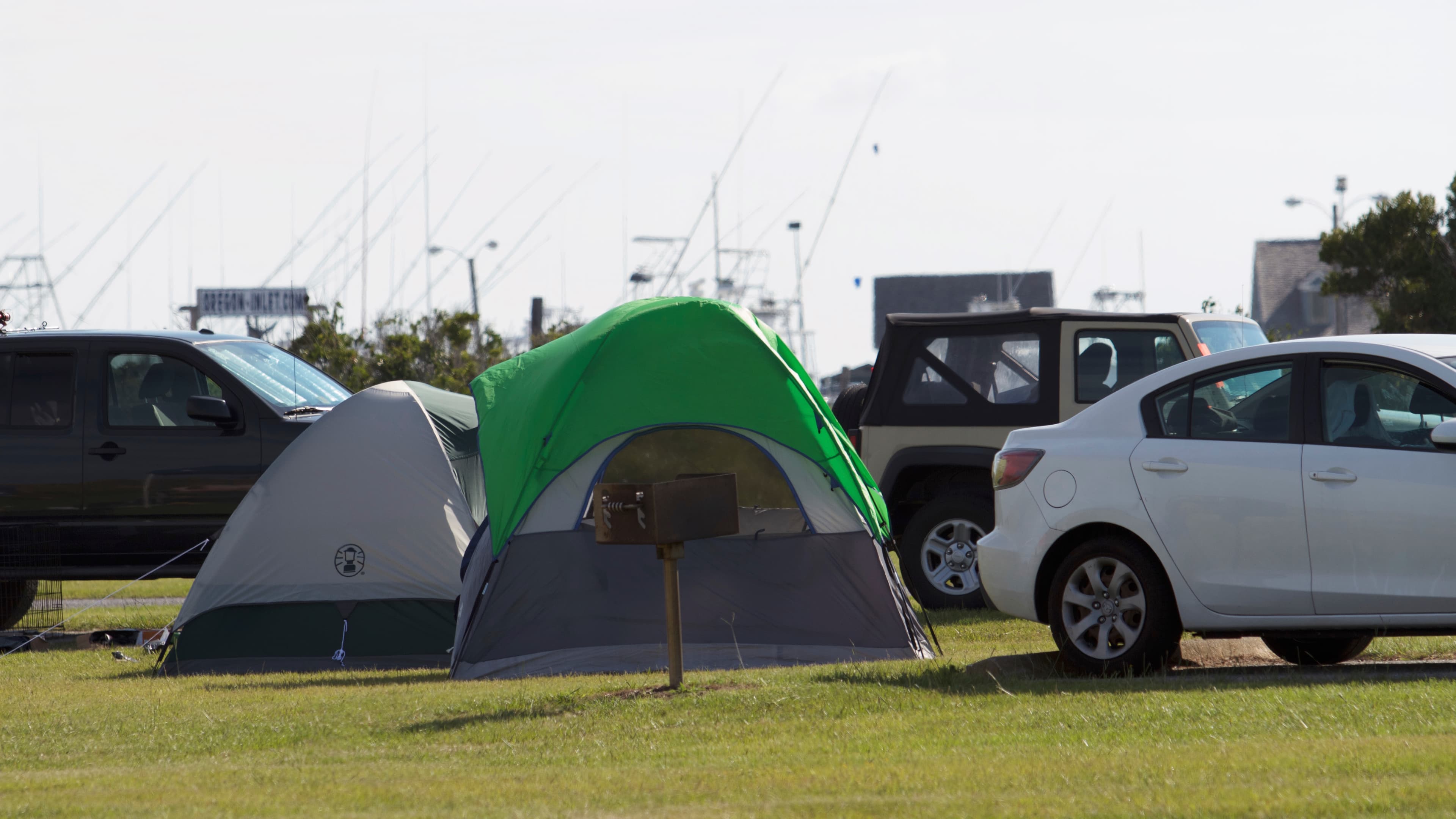
Oregon Inlet — Cape Hatteras National Seashore
Dune-backed sites sit steps from the surf beside the inlet, with the Gulf Stream charter fleet running out each morning and miles of beachcasting just out the door.
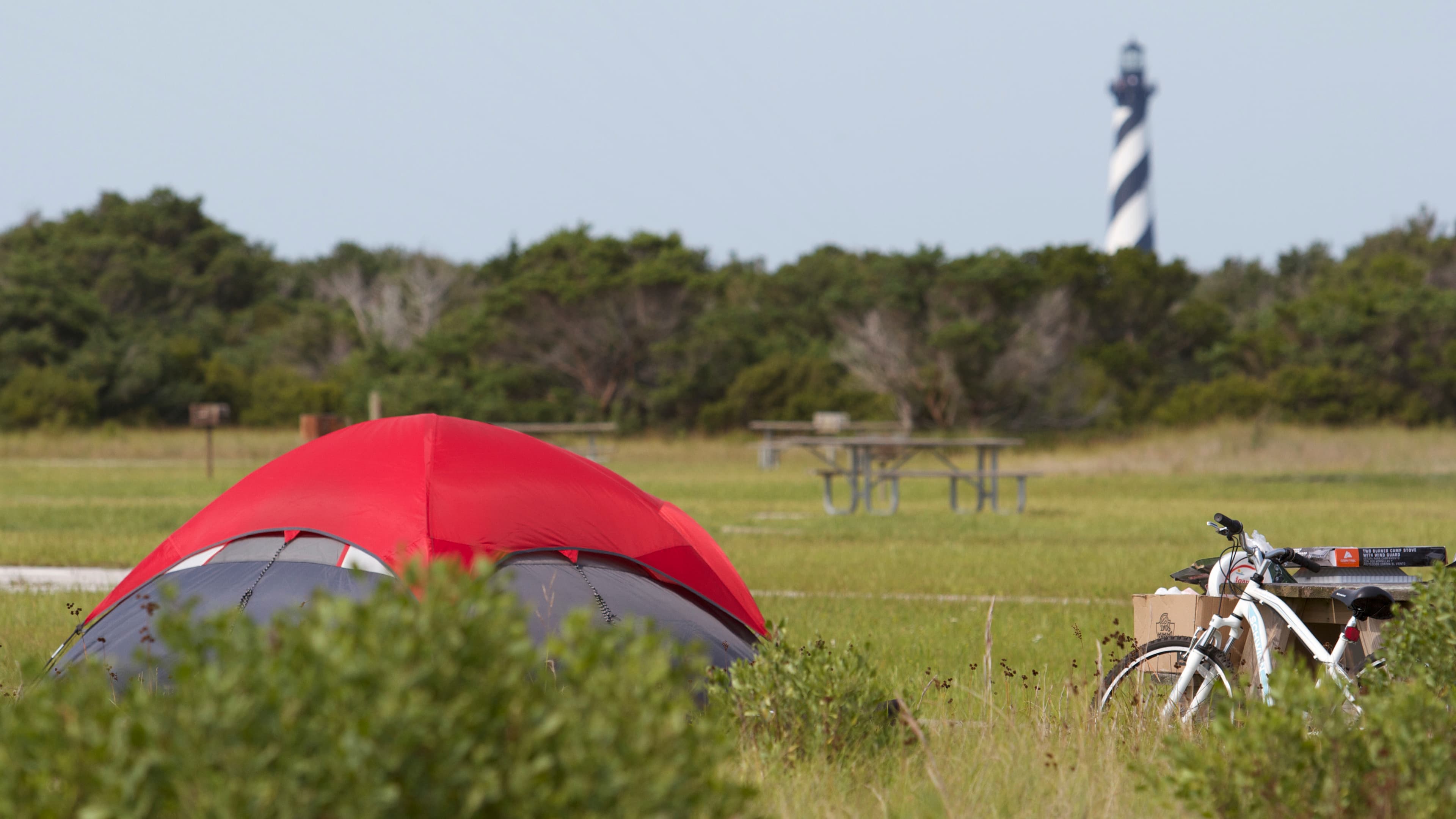
Cape Point — Cape Hatteras National Seashore
Camp under the Hatteras lighthouse where the currents collide at the Point — the East Coast's red-drum surf-fishing capital, with ORV beach access by permit.
§ 05D — Activity File
Best for Lakes & Paddling
Away from the coast, North Carolina's still water sits high in the mountains and out in the Piedmont — quiet, often no-motor or low-wake lakes ringed by forest. Canoe a Parkway lake under the rampart of Grandfather Mountain, or swim and paddle a southern-mountain reservoir down on the Georgia line.
Julian Price — Blue Ridge Parkway
Paddle no-motor Price Lake beneath Grandfather Mountain with on-site canoe and kayak rentals, launching straight from the Parkway's largest campground.
Jackrabbit Mountain — Nantahala National Forest
A swim beach, boat ramp, and bass fishing on Lake Chatuge, with many sites set right on the water in the state's far southwest corner against the Georgia line.
Badin Lake — Uwharrie National Forest
Swim, paddle, and fish a quiet Piedmont reservoir from lakeside sites — the closest mountain-free water camping to Charlotte and the Triad cities.
§ 07 — Q & A
Frequently asked
Fall is the prime window. Blue Ridge Parkway leaf color cresting from early October into early November pulls the whole country to the mountains, the air turns crisp and dry, and the Cataloochee elk rut bugles near the Smokies. Spring runs a close second — waterfalls around Brevard and Linville run at full force, and wildflowers, mountain laurel, and rhododendron bloom up the slopes from April into June. Summer splits the state: head to the mountains for genuinely cooler air at Mount Pisgah and the high Parkway, or to the Outer Banks for the beach, though Atlantic hurricane season opens in June. Winter stays mild on the coast but shuts much of the Parkway behind ice and gates. Mountain campgrounds book out for leaf weekends, so reserve early and aim midweek to dodge foliage traffic on the Parkway.