FIELD GUIDE · CHAPTER 22 · REGION IIIEST. 2026
Michigan
The Great Lakes State
MI · 44°21′ N · 85°25′ W · 319 SITES SURVEYED
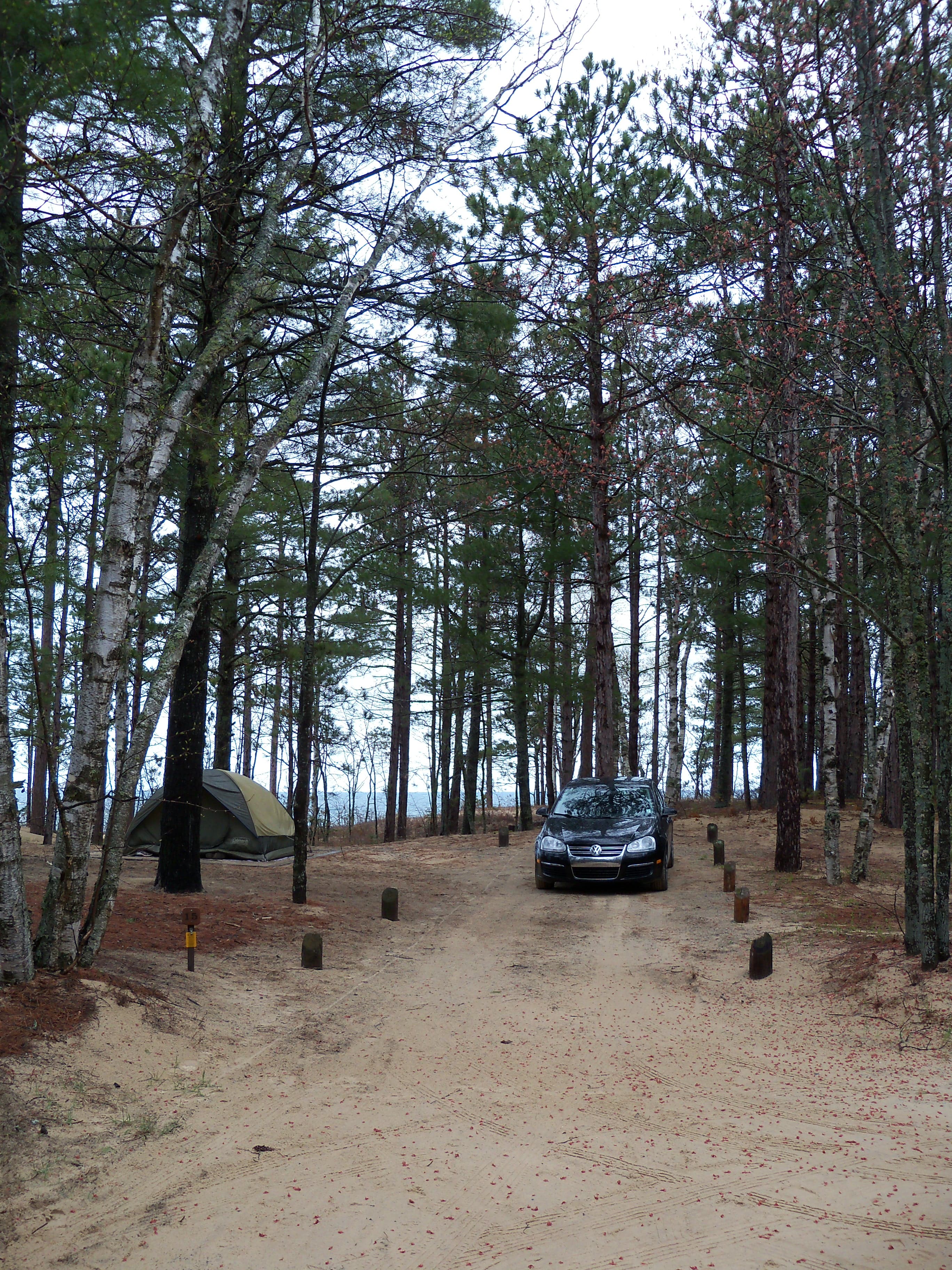
D. H. DAY CAMPGROUND — SLEEPING BEAR DUNES NATIONAL LAKESHORE · PLATE A-221
§ 01 — Opening Plate
A letter from the field
Michigan is a water state above all else — two peninsulas wrapped by four of the five Great Lakes, with more freshwater coastline than any other state at roughly 3,200 miles. Its camping identity splits along those shores. To the south, Lake Michigan's warm beaches, towering dunes, and long summer sunsets define the experience at Sleeping Bear Dunes National Lakeshore. To the north, Lake Superior's cold wild edge delivers sandstone cliffs, ribboning waterfalls, and the remote Upper Peninsula campgrounds of Pictured Rocks National Lakeshore. Farther still sits Isle Royale — a roadless Lake Superior wilderness island holding the least-visited national park in the Lower 48 and the only national park in the country that closes entirely for winter. Thread through the interior and you find nationally famous rivers: the Au Sable, Manistee, and Pere Marquette, prized for trout fishing and paddling. The season is short and intense, the autumn color tour is legendary, and the contrast is as stark as the two coasts — sand and sunsets below, moose and waterfalls above.
§ 02 — The Plates
Top 10 sites, filed
D. H. Day Campground — Sleeping Bear Dunes National Lakeshore

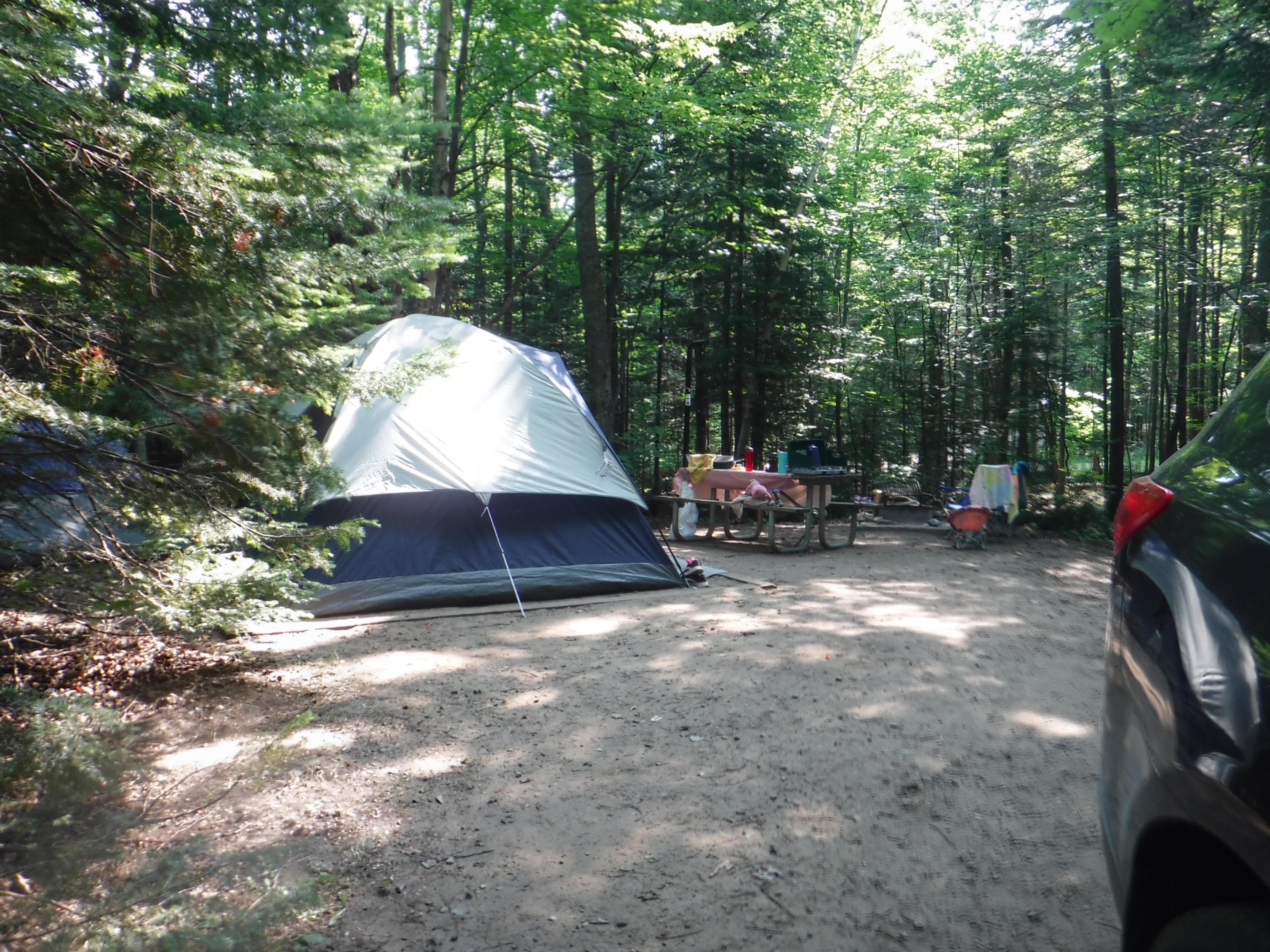
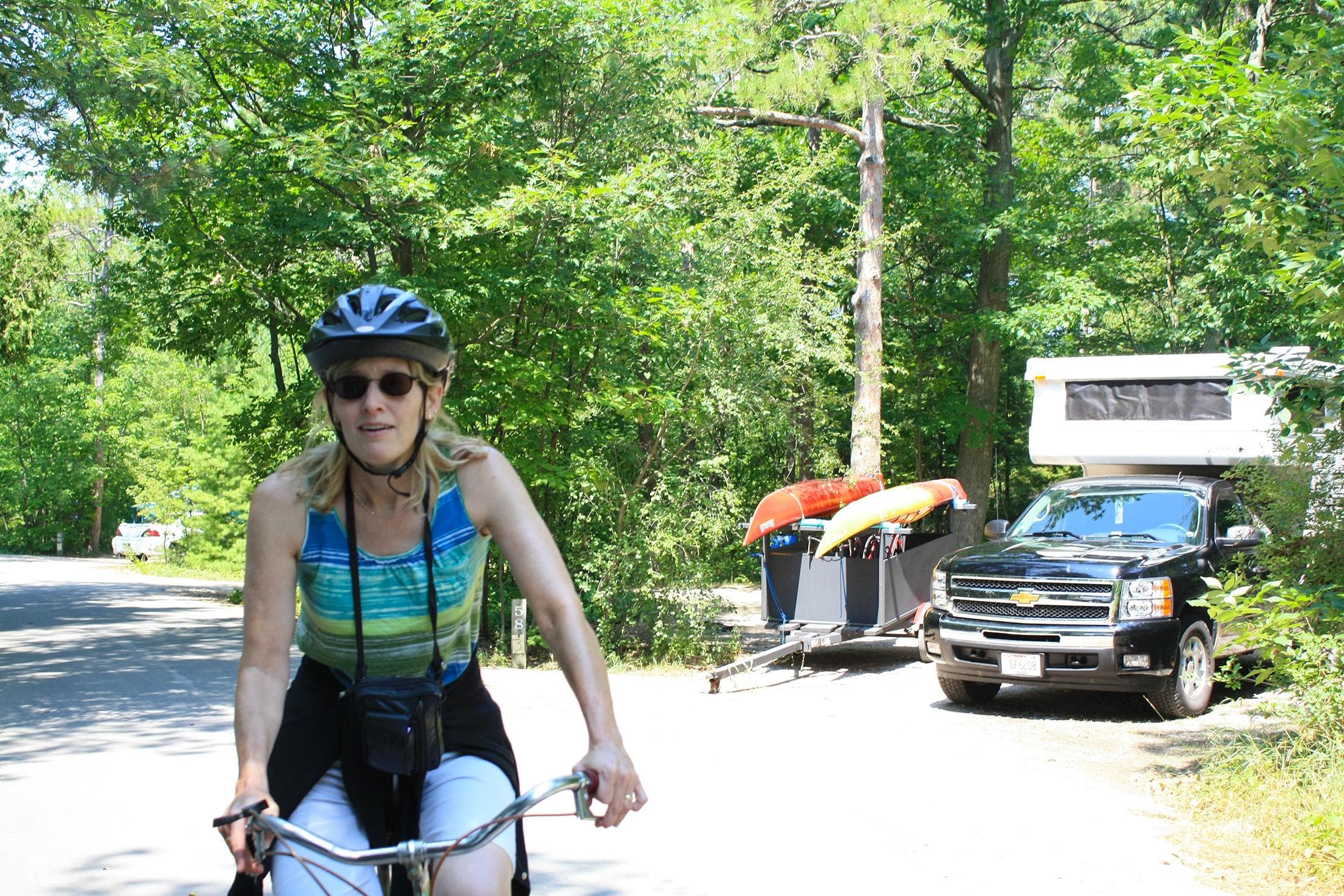
The flagship campground in Sleeping Bear Dunes National Lakeshore, set on M-109 near Glen Arbor and Glen Haven in roughly 88 rustic, shaded sites scattered through a hardwood forest a short walk from a quiet Lake Michigan beach. Minutes separate you from the famous Dune Climb, the crystal blue of Glen Lake, and the Sleeping Bear Heritage Trail. Reservable on Recreation.gov; vault toilets, no hookups. A beloved classic that books solid for summer weekends — plan ahead or aim for early in the week.
Platte River Campground — Sleeping Bear Dunes National Lakeshore
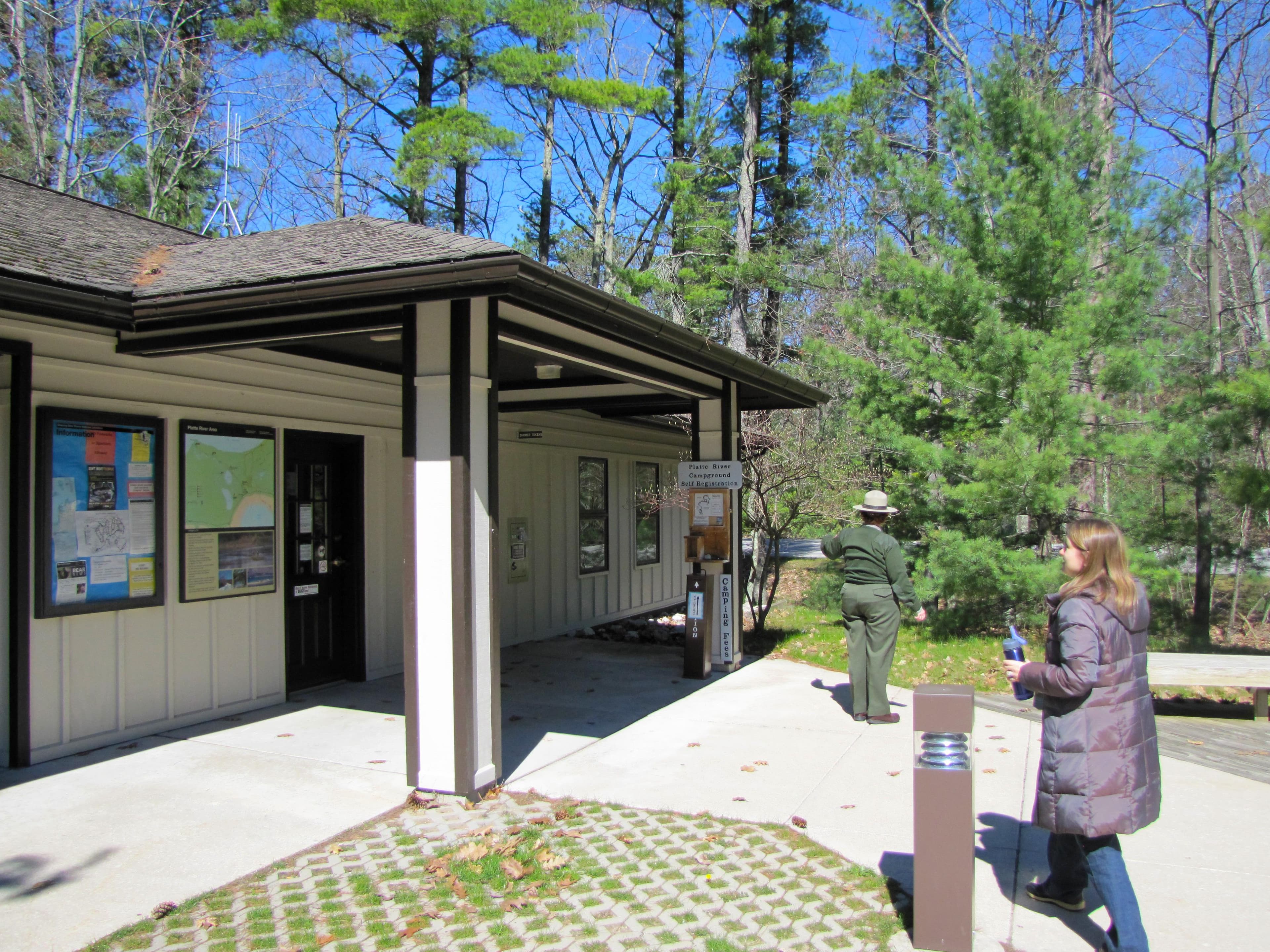
Sleeping Bear Dunes' larger, more developed campground, at the park's south end near Honor with about 150 sites — some with electric hookups — plus walk-in tent sites and modern restrooms with showers. The gentle Platte River runs right through, drawing paddlers and tubers who float downstream to Platte Bay on Lake Michigan. Reservable on Recreation.gov and a natural fit for families. It fills every summer weekend, so secure your spot months in advance, and the river carries a cool breeze through the loops even when July turns hot.

Sand Lake Campground — Manistee National Forest
A small, quiet Huron-Manistee National Forest camp near Wellston in the Lower Peninsula interior, where roughly 45 sites ring a clear inland lake with swimming and easy electric-motor fishing for bass and panfish. Close to both the Pine and the Pere Marquette National Scenic Rivers — blue-ribbon trout water and two of the Midwest's most loved paddling corridors. Reservable on Recreation.gov. A peaceful forest counterpoint to the crowded lakeshores, with cedar-lined cold-water trout rivers just minutes away at dawn.

Twelvemile Beach Campground — Pictured Rocks National Lakeshore
On H-58 between Munising and Grand Marais, about 36 rustic sites perched on a bluff above a long, sweeping Lake Superior beach backed by white birch — the marquee Upper Peninsula shoreline camp. Pictured Rocks National Lakeshore's frontcountry drive-in campgrounds, including Twelvemile Beach, are reservable on Recreation.gov, and summer fills fast — book ahead. The Lakeshore Trail and North Country National Scenic Trail run directly along the rim, and Superior's cold, clear water stretches to the horizon at sunset. Vault toilets, no hookups.
- 05Hurricane River Campground — Pictured Rocks National LakeshoreAt Pictured Rocks' eastern end near Grand Marais on H-58, where the Hurricane River…→
- 06Bay Furnace Campground — Hiawatha National ForestAt Christmas just west of Munising on M-28, this Hiawatha National Forest campground sets…→
- 07Little Bay de Noc — Hiawatha National ForestOn the Stonington Peninsula near Rapid River, this Hiawatha National Forest campground fronts the…→
- 08Black River Harbor Campground — Ottawa National ForestIn the Ottawa National Forest north of Ironwood, where the Black River meets Lake…→
- 09Sylvania (Clark Lake) Campground — Ottawa National ForestNear Watersmeet in the Ottawa National Forest, this developed campground sits at the entry…→
- 10Rock Harbor Campground — Isle Royale National ParkIsle Royale's east-end base, on a roadless Lake Superior wilderness island with no cars.…→
§ 03 — Field Data
The working page
Best Time
THE peak season and a short, intense one. Lake Michigan's beaches warm enough to swim by late June; every campground is open; July and August are the busiest, most celebrated months — Sleeping Bear Dunes and Pictured Rocks book out months ahead, so reserve early and aim midweek. Isle Royale's full season runs now. Days are long and mild; Superior stays cold for a bracing plunge. Bugs ease by midsummer in most spots. Afternoon storms blow up fast off the lakes — watch the western horizon and get off the water early. Michigan's prime camping window, but you'll share it with everyone who waited all winter.
Reservations
Yes for most of them, and well ahead. Sleeping Bear Dunes' D. H. Day and Platte River campgrounds book on Recreation.gov on a rolling six-month window and fill for summer weekends almost immediately when they open.…
Permits & Signal
Dispersed, no-fee camping is allowed across much of the Hiawatha, Ottawa, and Huron-Manistee national forests, outside developed campgrounds and posted day-use areas. Typical rules across all three: a 14- to 16-day stay limit, camp on durable…
Camping Etiquette
Dispersed, no-fee camping is allowed across much of the Hiawatha, Ottawa, and Huron-Manistee national forests, outside developed campgrounds and posted day-use areas. Typical rules across all three: a 14- to 16-day stay limit, camp on durable…
§ 04 — Almanac
Four seasons, four readings
Spring
Apr–May
A slow, late awakening. Ice lingers on inland lakes and Lake Superior into April; snowmelt drives the western UP waterfalls — Tahquamenon, Bond, and the Black River falls — to peak flow. Forest campgrounds open gradually through mid-to-late May, and the downstate Lower Peninsula greens up weeks ahead of the UP. Lake Superior stays frigid well into summer. The catch: black flies and mosquitoes arrive in force across the north from late May into June — pack a head net and DEET, not optional. Isle Royale's season opens in mid-April (Windigo first, then the Houghton and Copper Harbor ferries ramp up through May). Layers and patience required.
Summer
Jun–Aug
THE peak season and a short, intense one. Lake Michigan's beaches warm enough to swim by late June; every campground is open; July and August are the busiest, most celebrated months — Sleeping Bear Dunes and Pictured Rocks book out months ahead, so reserve early and aim midweek. Isle Royale's full season runs now. Days are long and mild; Superior stays cold for a bracing plunge. Bugs ease by midsummer in most spots. Afternoon storms blow up fast off the lakes — watch the western horizon and get off the water early. Michigan's prime camping window, but you'll share it with everyone who waited all winter.
Fall
Sep–Oct
The connoisseur's season. The UP and northern Lower Peninsula color tour peaks from late September into early October — sugar maples and birch blazing scarlet and gold against blue water — with crisp air, thinning crowds, and zero bugs. Arguably the most beautiful time to camp in Michigan. But the window closes fast: many forest and lakeshore campgrounds shut after Labor Day or Columbus Day weekend, Isle Royale begins winding down (Rock Harbor closes in late October), and the first hard frosts and early lake-effect snow can arrive up north by late October. Reserve well ahead — color weekends fill almost as fast as summer.
Winter
Nov–Mar
Most federal campgrounds close and the Upper Peninsula disappears under legendary lake-effect snow, with the Keweenaw snowbelt routinely topping 200 inches. Isle Royale shuts entirely from November 1 until mid-April, the only U.S. national park to close completely for winter. A handful of state forest sites and lower-peninsula state parks stay open for winter camping, and the snowmobile trail network, cross-country ski corridors, and ice-fishing scene take over. If you go, expect deep cold, short days, and unplowed access roads — come with the right gear and a full tank.
§ 05A — Activity File
Best for Hiking & Backpacking
Michigan's signature hiking hugs the big water — the Pictured Rocks cliffs on Lake Superior, the waterfall byways of the western UP, and the wild Greenstone Ridge of Isle Royale — with the North Country National Scenic Trail stitching much of it together across the Upper Peninsula.
Twelvemile Beach — Pictured Rocks National Lakeshore
The Lakeshore and North Country trails run the birch-topped bluff right from camp, opening miles of near-empty Lake Superior beach-walking in both directions toward the painted cliffs.
Rock Harbor — Isle Royale National Park
Greenstone Ridge and the Scoville Point loop leave right from the Rock Harbor dock — the island's two marquee day hikes through boreal forest where the footpath is the only thoroughfare.
Black River Harbor — Ottawa National Forest
Trails link the Black River's string of five waterfalls and the North Country Trail down to the Lake Superior harbor and its swaying suspension footbridge.
Hurricane River — Pictured Rocks National Lakeshore
The eastern Pictured Rocks trailhead: hike east to the Log Slide overlook — a towering sand bank dropping straight to Lake Superior — and on through the Grand Sable Dunes.
§ 05B — Activity File
Best for Beaches & Swimming
Michigan has more freshwater beach than any state, and the camping proves it — warm, swimmable Lake Michigan sand on the dune coast in the south, and the bracing, crystal-clear Lake Superior shoreline up north for the brave.
D. H. Day — Sleeping Bear Dunes National Lakeshore
A short walk from the shaded sites reaches a calm, low-traffic Lake Michigan beach, with the Manitou Islands floating on the horizon and big-water sunsets.
Platte River — Sleeping Bear Dunes National Lakeshore
Float the gentle Platte River downstream to warm, shallow Platte Bay — one of Lake Michigan's most family-friendly swimming beaches, with a sandy bottom and easy wading.
Twelvemile Beach — Pictured Rocks National Lakeshore
A long, wild Lake Superior beach stretches right below camp — cold and crystal clear, for a quick bracing plunge and unforgettable sunsets over open water.
Bay Furnace — Hiawatha National Forest
A calm Lake Superior beach at Christmas with Grand Island views across the water — an easy swim before catching the ferry or the Pictured Rocks boat tour out of Munising.
§ 05C — Activity File
Best for Paddling & Inland Lakes
Away from the big lakes, Michigan's inland water is paddling heaven — the wilderness lake-chains of Sylvania, gentle rivers running to Lake Michigan, and quiet forest lakes where the only wake is your own canoe.
Sylvania (Clark Lake) — Ottawa National Forest
Paddle a maze of more than 30 clear, old-growth-rimmed wilderness lakes, with quiet portages connecting them and trophy catch-and-release smallmouth bass holding in Clark Lake's depths.
Platte River — Sleeping Bear Dunes National Lakeshore
A classic lazy-river run: put in a canoe, kayak, or tube by the campground and drift the gentle, sandy-bottomed Platte through forest to its Lake Michigan mouth.
Little Bay de Noc — Hiawatha National Forest
Launch onto the sheltered Lake Michigan bay for kayaking through open water, with some of the Midwest's best walleye and perch fishing just off the dock.
Sand Lake — Manistee National Forest
A calm, no-wake inland lake for canoeing and panfishing, with the Pine and Pere Marquette national-scenic-river paddling corridors just minutes away.
§ 05D — Activity File
Best for Wildlife & Fishing
Michigan's wildlife runs from the moose and wolves of Isle Royale — home to the longest-running predator-prey study on Earth — to the loons, black bears, and eagles of the UP forests, with walleye, bass, and trout fishing that draws anglers from across the Midwest.
Rock Harbor — Isle Royale National Park
The island's storied moose and gray wolves, plus loons and lake trout, in the most remote wildlife setting in the Great Lakes — no roads, no cars, no shortcuts.
Little Bay de Noc — Hiawatha National Forest
Trophy walleye and perch off the bay, plus the fall monarch butterfly migration staging at nearby Peninsula Point Lighthouse — an underrated wildlife convergence on the Lake Michigan shore.
Black River Harbor — Ottawa National Forest
Bald eagles work the Superior rivermouth year-round, and the autumn broad-winged hawk migration streams the western UP shoreline overhead each September.
Sylvania (Clark Lake) — Ottawa National Forest
Loons calling across old-growth-rimmed lakes, with black bear and bald eagles in the backcountry — all under some of the darkest night skies in the Midwest.
§ 07 — Q & A
Frequently asked
Summer (June through August) is the prime season — Lake Michigan's beaches warm enough to swim by late June, every campground is open, and July and August are the busiest months in the whole state. Reserve Sleeping Bear Dunes and Pictured Rocks campgrounds months ahead and aim for midweek if you can. Fall (late September into early October) is the connoisseur's pick: the Upper Peninsula and northern Lower Peninsula color tour blazes scarlet and gold, the air turns crisp, bugs disappear, and crowds thin — arguably the most beautiful time to camp in Michigan. But the window closes fast: campgrounds and Isle Royale start shutting down after Labor Day. Spring is late and famously buggy — black flies arrive in force from late May into June — though snowmelt drives the western UP waterfalls to peak flow. Winter closes most federal sites under deep lake-effect snow.